
David Suzuki is reporting that neonicotinoids may not be the only danger facing bees and other important pollinators. Read more about it on David Suzuki’s website: http://action2.davidsuzuki.org/bees to learn more about the new “F-Word”: flupyradifurone.
Author: ingersolldistrictnatureclub
Reminder: Buy Your Christmas Poinsettias And Help Support IDNC

Download your order form here: IDNC Poinsettias Order Form (1)
Celebrate The Holidays With Moonlight & Mistletoe
Are you looking to organize a Christmas party? Let us handle everything from dinner to dancing to door prizes. Proceeds go, in part, to the Oxford Pollination Awareness Week.

Scare Yourself Up A Good Time For A Good Cause This Halloween

Last Weekend To Snap Photos For Our Contest!
It’s coming down to crunch time for entries in the first annual Ingersoll District Nature Club Photo Contest. What better way to spend time together with loved ones this long holiday weekend than by taking a way to experience the beauty of nature that can be experienced in Oxford County (including the Lawson Nature Reserve)? And while you’re out and about, take your camera and snap some photos to enter in the photo contest! Our deadline is Tuesday, October 14. There’s still time to submit your photos but you can’t win if you don’t enter. Check the flyer for more details.
Videos Showcasing The Beauty Of Nature In Oxford County
In between cute cat videos, here are some YouTube videos that showcase the beauty of nature in Oxford County:
Trails and Birding in Oxford County:
https://www.youtube.com/watch?v=rh-izDLuYl0
Embro Pond – Oxford County:
https://www.youtube.com/watch?v=QAP8dHm4OHI
A Virtual Tour of Oxford County:
https://www.youtube.com/watch?v=yfcU8EFo790
Nature Teaser:
https://www.youtube.com/watch?v=_PDbHyqUE9w
Migratory Species In Focus: Canada Goose (Branta Canadensis)
Migratory Species in Focus:
Canada Goose (Branta Canadensis)


Description:
Primarily an herbivore, the Canada Goose is a water bird native to North America. It has a black head, long black neck, white cheeks, a brown body and webbed feet. It is often seen in flight moving in pairs or flocks. Flocks often assume the “V” formation when migrating in the fall season. Migration begins when the soil starts to freeze on their breeding grounds. Breeding happens from April to May and the female goose will lay approximately 2-10 eggs with goslings hatching about 28-30 days later. As the goslings grow, they will stay with their parents for a full year at a time and will return with them the following year, after their migration.
*Special Note:
- Due to over-hunting and loss of habitat in the early 1900’s, the Canada Goose was thought to be extinct by 1950. In 1962, a small migrating flock was discovered in Rochester, Minnesota. With help from the Northern Prairie Wildlife Research Center, by 1981 the species had made its come back.
- Some studies indicate that their population has doubled since 1975. The large influx of its species has developed some negative effects for the territories that it resides. The nuisance of their droppings, bacteria in the droppings, noises and confrontational behavior are creating safety concerns and unsavory recreational facilities;
- The Canadian Wildlife Service runs a band program that monitors more than 3,000 geese each year to support decisions managing the bird populations. Report a Gooses Leg Band to 1.800.327. BAND
Range:
- It breeds in Canada and the Northern United States – the Great Lakes region maintains the largest population.
- The most northerly geese breed on the Tundra of the Arctic;
- Spends its winters migrating in California, South Carolina and Northern Mexico.
Habitat:
- The Canadian Goose will be found anywhere near lakes, rivers, ponds, or small or large bodies of water, in yards, park lawns and farm fields;
- You will find them grazing in and on the open grass;
- Although territorial, the Canada Goose congregates with several hundred to several thousand when migrating south over the winter
Protection:
- Canada Geese and their nests are protected by the Migratory Birds Convention Act, 1994. To possess, hunt or interfere with their activity in anyway is restricted and punishable by law;
- The Migratory Bird Convention recognizes that birds may sometimes cause damage and danger, and provides management tools to reduce those conflicts – migratory birds, their eggs or nests may NOT be harmed without permit!
FUN FACTS:
- Scientists say there are up to 11 different races of the Canada Goose;
- The Canada Goose is the largest wild goose ever recorded of its species;
- Canada Geese continue to nest in the same region their parents did, often in the same nest;
- The Canada Goose is found in every adjoining U.S. State and Canadian Province at one time of the year or another;
- When mating, the Canada Goose will choose its mate for life. When one of the pair has died, the other will find another mate;
- When they arrive at their migration destination, the geese must replace their worn-out “flight feathers”. For a period of four-to-five weeks, the geese will not be able to fly;
- Canada Geese can travel more than 1000 km in one day;
- In captivity, the longest living goose is known to be 80 years old. In the wild, the oldest goose was reported to be 30 years.
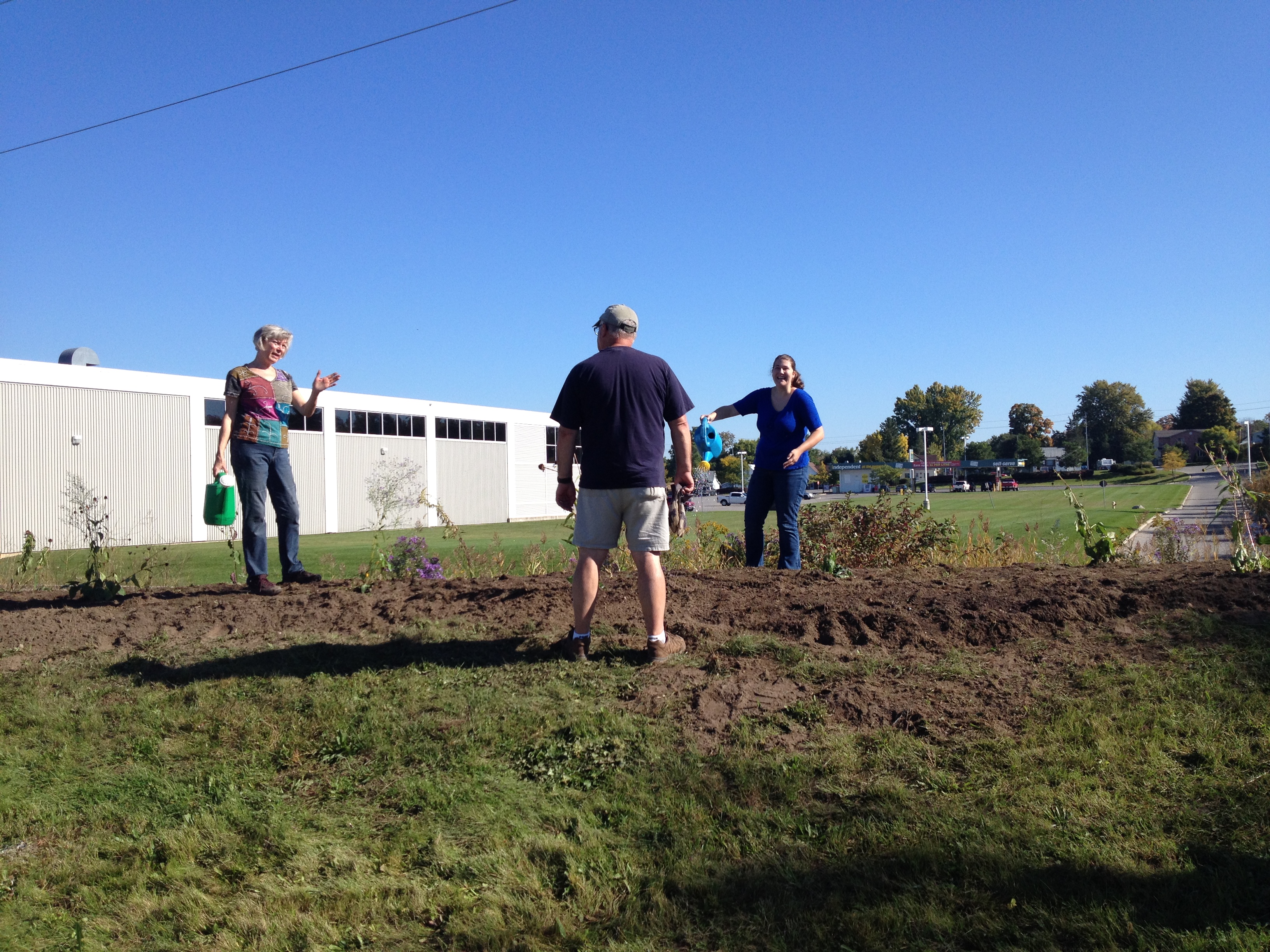
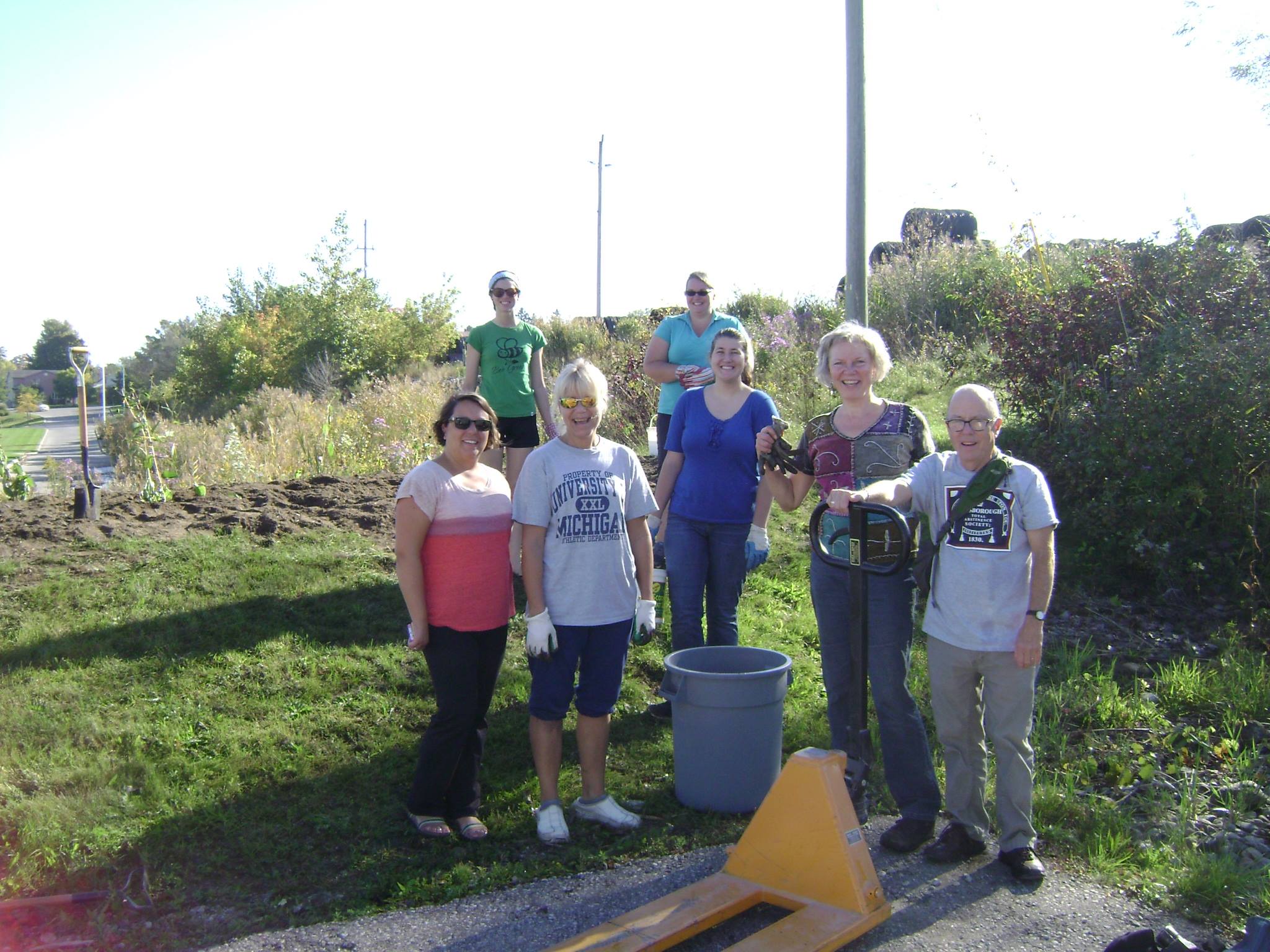
Photos From Pollination Garden Installation
Thanks to Sarah Cameron and Robin House for submitting these photos of this past Saturday’s installation of a Pollination Garden at the Ingersoll Paper Box Co. Ltd.







Oxford Pollination Awareness Week Is Coming!
Oxford Pollination Awareness Week
The danger of neonicotinoids and the decline of pollinators remain among the hottest topics in this area.
As a follow-up to last June’s Decline of the Honeybee event, the Ingersoll District Nature Club will be promoting Oxford Pollination Awareness Week, November 25-27, to raise awareness of the importance of pollinators to our community and the danger that neonicotinoids present
The Club is currently organizing this event as an educational and community engagement opportunity, bringing in experts George Scott of the Niagara Beeway and Patty Moss of the Niagara Park Butterfly Conservatory to lead educational sessions and town halls.
This is a fantastic opportunity to learn more about a dangerous situation facing our environment. For further developments and information about the Oxford Pollination Awareness Week, watch the Ingersoll District Nature Club website (https://ingersollnatureclub.com/).
This Week’s Endangered Species In Focus: The Milksnake (Lampropeltis Triangulum)
Milksnake (Lampropeltis Triangulum)


Description:
Most often seen at night while hunting, the milksnake is grey or tan with alternating red or reddish-brown blotches (outlined in black) along its back and sides, its belly looks like black and white checkerboard. The milksnake can grow to be one metre in length or more. In early spring, the female lays approximately 3-24 eggs and the babies will hatch about 7-20 weeks later, with a life span of approximately 7 years, but have been known to live up to 20.
Status:
- Special Concern Provincially and Nationally
Important Dates:
- May 2002: Designated as Species of Special Concern;
- May 2014: Last time assessed by the Committee on the Status of Endangered Wildlife in Canada (COSEWIC);
Range:
- The below image provided by Ontario Nature Organization shows the milksnakes distribution in Southern Ontario:
- Southern Ontario and a small section of the Ottawa River in Quebec appear to have the most recorded sightings of this species in Canada;

Habitat:
- Lives in a wide range of habitats, such as rocky outcrops, forests, prairies, pastures and farm buildings where rodents are common;
- In late October/early November will hibernate underground in rotting logs or in the foundations of old buildings.
Threats:
- Due to its mistaken identity (rattler) when threatened, the milksnake is often persecuted by pedestrians;
- Habitat loss remains a threat to this species as well;
- The slow-moving milksnake can be found crossing busy roads and will ultimately be ran over by vehicles if not moving fast enough.
Protection:
- Listed as a Special Concern under the Endangered Species Act, 2007 ;
- Listed as a Special Concern under the federal Species At Risk Act (SARA) ;
- Designated as a Specially Protected Reptile under the Fish and Wildlife Conservation Act, 1997 ;
- If existing in a National Park, is protected by the Canada National Parks Act;
- The Toronto Zoo and Georgian Bay Reptile Awareness Program are helping to educate the public on snakes and their protection.
What YOU Can Do To Help:
- If you encounter the milksnake on an outing, report your sighting to the Natural Heritage Information Centre with your coordinates for further investigation;
- The Ontario Reptile and Amphibian Atlas collects observations of the milksnake as well;
- Volunteer at your local Nature Club to learn more about the species of special concern in your area;
- Throughout May to October, keep your eye out for the slow moving milksnake crossing our roads;
- Never purchase snakes that have been captured in the wild – contact the Ministry of Natural Resources to report any known illegal activities (1.877.TIPS.MNR (847.7667));
FUN FACTS:
- Sometimes mistaken as a rattlesnake when threatened, the milksnake raises its head high in the air and vibrates its tail and may attempt to bite;
- The milksnake received its name from the false belief that it took milk from cows in barns;
- This snake is the only snake in Ontario that has red blotches;
- The milksnake is actually a type of constrictor – it wraps itself around its prey to kill and them feed (similar to the tropical Boa Constrictor);
 Ingersoll District Nature Club