Earth Day at Birds Canada

From The Long Point Bird Observatory:

Less than a week to go for our FREE Earth Day event at Birds Canada Birds Canada Join us for an Earth Day event sponsored by Seniors for Climate Action Now! Featuring bird walk, garden talk, plant sale & film screening!

AGENDA:

1:00 PM – 1:45 PM: Join host Kevin Kavanaugh from South Coast Gardens as he gives a talk about the importance of native species to birds, bees, and pollinators!

2:00 PM – 2:45 PM: Join Kathy Jones, biologist and volunteer coordinator at Birds Canada as she takes guests on a slow birding walk of the grounds.

3:00 PM – 4:30 PM: Film screening of the documentary film 2040. Award-winning director Damon Gameau (That Sugar Film) embarks on a journey to explore what the future could look like by the year 2040 if we simply embraced the best solutions already available to us to improve our planet and shifted them rapidly into the mainstream.

1:00 PM – 4:00 PM: Plant sale featuring native plants by Adam Timpf and South Coast Gardens.

THESE EVENTS ARE FREE, BUT SPACE IS LIMITED. REGISTRATION FOR THESE EVENTS IS STRONGLY RECOMMENDED

Long Point Biosphere Ruth Frost South Coast Gardens Experience Norfolk Canada Norfolk Insider Nature, Climate, Action blogNorfolk

The Field Pussytoes – Cute Name, Cuter Plant

From The Mill Pond, Dorchester, Ontario

By Lorraine Johnson

One of the toughest of the tough, field pussytoes (Antennaria neglecta) is a great alternative to lawn grass in sunny conditions. It will hold up to a bit of foot traffic (though not a baseball game or anything rigorous!) and spreads with virtually no maintenance.

Bonus: it’s drought tolerant!

Another bonus: it’s a larval host plant for the American lady butterfly

So here’s an idea: remove some lawn area that you don’t use very much, plant some pussytoes, and grow some butterflies.

Field pussytoes (Antennaria neglecta)

Height: 4 in to 12 in

Flowers: white

Blooming period:early to mid-spring

Exposure: sun to partial sun

Soil:regular to dry; drought tolerant

Specialist pollinator interactions:larval host for American painted lady butterfly, everlasting bud midge, everlasting tebenna moth

Good combinations: prairie smoke, pearly everlasting, golden Alexanders, wild strawberry, blue-eyed grass

This drought-tolerant native is a good choice if you’re looking for a low-growing groundcover for sunny conditions. Unlike most native meadow species, not only does field pussytoes stay short, but it also blooms in spring. The white flowers, which are visited by bees and flies, complement the plant’s silvery foliage, and the fluffy seedheads are also decorative. Use it at the front of the border so it doesn’t get lost in the exuberant growth of surrounding plants. A bonus—field pussytoes does just fine in poor soil. And yes, as its common name suggests, the flower clusters at the end of the flowering stalks do, indeed, look like a cat’s furry paw. A closely related native species is plantain-leaved pussytoes (A. parliniissp. fallax) 💚

Turtle Species in Ontario At Risk

From Earthroots:

Ontario is home to eight native turtle species and seven of them are at risk of disappearing.

Spring is a crucial time, as turtles look for sunny basking sites and begin choosing their nesting grounds.

Protecting turtles means protecting wetlands, shorelines, and the places they return to year after year.

This season let’s give them the space and safety they need.

Share the shore. Protect our turtles.

Beware of Scilia

From The Mill Pond, Dorchester, Ontario:

That little blue flower that’s popping up in the lawns right now is called Scilla… and it’s bad.

It’s an invasive species that’s toxic to pets and humans if ingested
It’s a fast spreading bulb
It crowds out native spring flowers
It provides little or no nutrients to local insects

To manage it, gardeners should prevent seeding by mowing or removing flowers, and dig up bulbs (ensuring all bulbils are removed) before they spread to nearby woods 

🌱
💚

Frogs Join UTRCA Team To Support Flood Forecasting Efforts

From the Upper Thames River Conservation Authority:

Big news from our flood forecasting team… we’ve made some new hires! 🐸🐸 After years of monitoring rainfall, water levels, and watershed conditions, we’re excited to announce that frogs have officially joined the team to support flood forecasting efforts.

Frogs are highly sensitive to changes in moisture, temperature, and atmospheric pressure, making them ideal for:

💧 Early warning “chorus alerts” before rain events

💧 Wetland condition monitoring

💧 On-the-ground reporting

Our team has already noticed increased accuracy during spring conditions, although meetings have become significantly louder…

We’re currently working on translating key frog calls into actionable data. Early findings suggest:

“Ribbit” = light rain

“RIBBIT RIBBIT” = significant rainfall

Continuous chorus = you might want to check your sump pump

More updates to come as our newest team members settle into their roles.

Sometimes The Best Medicine Is In Your Own Backyard

From Native Yardening:

I often hear people defend invasive plants by saying, “But it’s medicinal!”

And yes, that’s the reason some invasive species were brought to North America in the first place.

But because they evolved in different parts of the world, they don’t fit into the natural checks and balances of our native ecosystems and they’re able to overtake large areas.

If you’re someone who uses invasive species medicinally, I have good news.

If a species is invasive to your area, you don’t need to intentionally plant it in your yard. It’s already growing all around you. And you’re actually doing a favor to the environment by harvesting as much of it as you can.

And if you have a garden where you grow medicinal plants, you can use that space to grow ones that are native to where you live!

Now you have a wider range of plants to work with AND it’s eco-friendly.

Here are a few of the many medicinal plant species that are native to North America.

Plant medicine is sacred to many cultures. You don’t have to use plant medicine, but please be respectful of it.

Some of these plants have research in western literature backing up the benefits, others do not. They’ve all been traditionally used for these benefits. Do with that information what you will.

The listed benefits and species are not exhaustive. Research what part(s) of each plant are used and how to prepare them properly before consuming anything.

*Consult your doctor before consuming any new herbs or supplements, research drug interactions and side effects, and never consume a plant if you’re not 100% sure you’ve identified it correctly, none of this is medical advice.*

Species listed:

🌿 Purple coneflower (Echinacea purpurea)

🌿 Yarrow (Achillea millefolium)

🌿 Wild ginger (Asarum canadense)

🌿 Witch hazel (Hamamelis virginiana)

🌿 Bee balm (Monarda fistulosa)

🌿 Common evening primrose (Oenothera biennis)

🌿 Butterfly weed (Asclepias tuberosa)

🌿 Pipsissewa (Chimaphila umbellata)

🌿 American elderberry (Sambucus canadensis)

🌿 American ginseng (Panax quinquefolius)

🌿 Wild geranium (Geranium maculatum)

🌿 Pony beebalm (Monarda pectinata)

🌿 California poppy (Eschscholzia californica)

🌿 American persimmon (Diospyros virginiana)

🌿 Osha root (Ligusticum porteri)

🌿 Narrow-leaf coneflower (Echinacea angustifolia)

🌿 Parry’s agave (Agave parryi)

The color key for BONAP’s native range maps is included at the end of the slides

IDNC Trip To The Archie Coulter Conservation Area

It was crispy cold on March 14, 2026, but it was a beautiful morning for a walk at Archie Coulter Conservation Area, following breakfast at Springwater’s Pancake and Maple Syrup Festival. The Nature Club then travelled to Aylmer Wildlife Management Area to view the tundra swans. The big influx from the day before had already moved on but there were still plenty to view. Thanks to the IDNC club members who came out!

Support The Piping Plover Habitat at Wasaga Beach

From Ontario Nature:
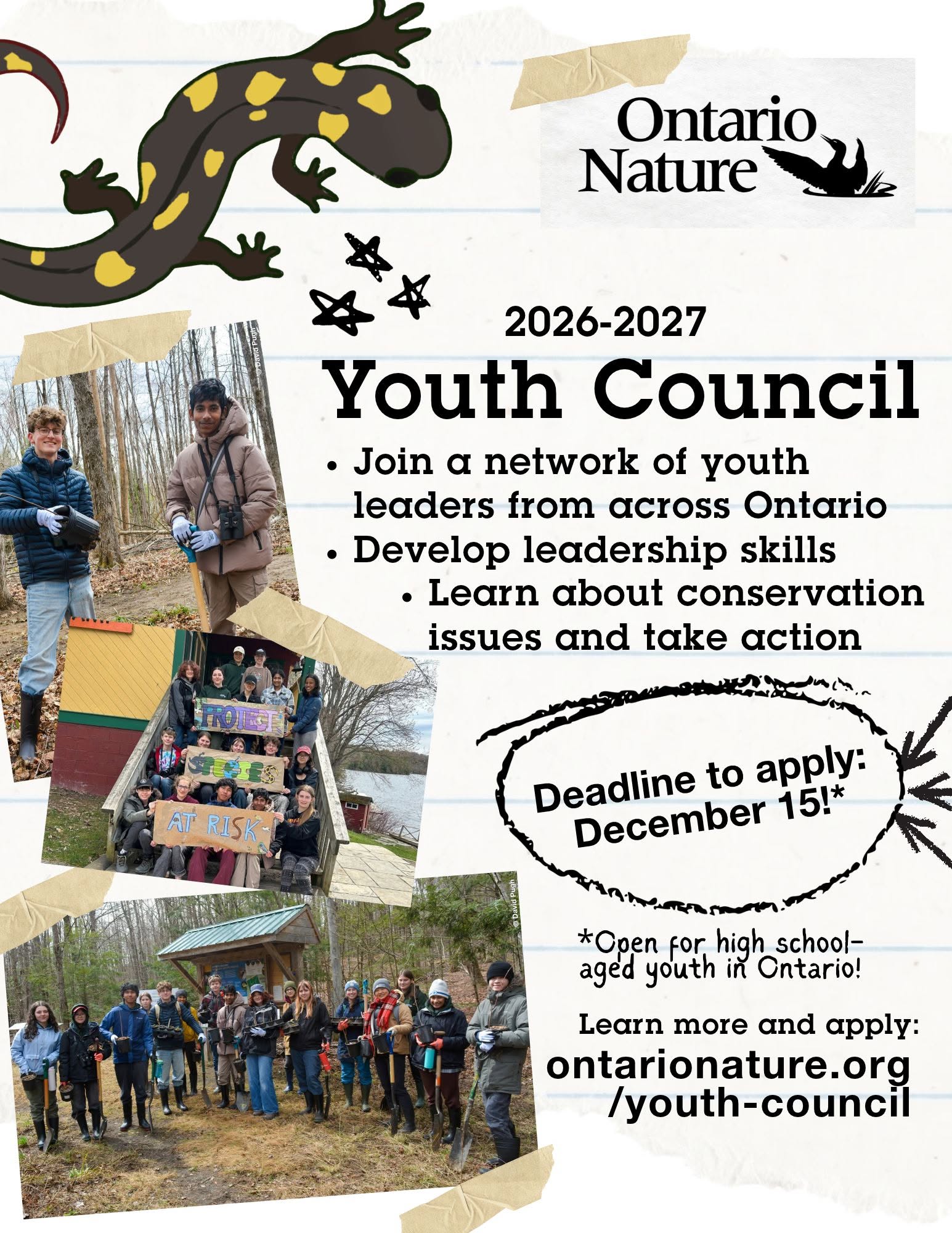
Spring is arriving at Wasaga Beach, and with it comes an urgent moment for piping plovers.

Nearly 70% of Ontario’s piping plovers nest at Wasaga Beach, making this iconic shoreline one of the most important places in the province for the species’ survival. Weakening protections here could have serious consequences just as these small shorebirds return for nesting season.

Spread awareness by sharing this post and our blog to help educate others about piping plovers and the importance of keeping strong protections in place at Wasaga Beach.

Read our blog about the risk to piping plovers at Wasaga Beach.

The Science Behind the Blue of the Blue Jay

From The Mill Pond, Dorchester, Ontario:

Blue jays are one of the most recognizable birds in Canada, especially in Ontario. Their vibrant blue feathers make them a favorite among birdwatchers and backyard nature lovers. But here’s a surprising fact: blue jays aren’t truly blue.

The Science Behind the Blue

At Toronto and Region Conservation Authority’s (TRCA) Tommy Thompson Park Bird Research Station (TTPBRS), our bird migration monitoring program helps reveal fascinating insights.

Despite their name and appearance, blue jays don’t have blue pigment in their feathers. Instead, their color comes from a phenomenon called structural coloration — a fascinating trick of physics.

Each feather contains microscopic grooves and ridges spaced precisely to reflect blue wavelengths. When light hits these structures, it bounces back as blue — not because of pigment, but because of how the light is manipulated. If you backlight a blue jay feather, it appears grayish brown, revealing the melanin underneath 💚

Info… @Torontoandregionconservationauthority