This Week’s Endangered Species In Focus: Spiny Softshell (Apalone spinifera) Turtle

Spiny Softshell (Apalone spinifera) Turtle


softshell2softshell1


Status: Threatened Provincially and Nationally


Description:

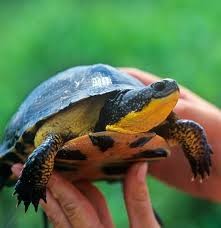
The spiny softshell turtle is one of the largest freshwater turtle species in North America. It is Ontario’s only turtle with a flexible, leathery upper shell. The shell is olive-grey, brownish or tan, and its edges are yellow with a black outline, along each side of the head is a distinct yellow stripe outlined in black. In adult females, the shell may be smooth, but there are several large spines or cone-like projections.  Spiny softshells begin mating between the ages 8 and 10 in mid-to-late spring and the eggs will hatch in late August to September.


Important Dates:


2008: Species assessed as Threatened under the Endangered Species Act


June 30, 2013: Species granted Habitat Protection


Range:

  • In Canada, the Spiny Softshell is found only in Quebec and southwestern Ontario in the Lake St. Clair, Lake Erie and western Lake Ontario watersheds;
  • The majority of Spiny Softshells in Ontario are found in the Thames and Sydenham Rivers, as well as two sites in Lake Erie;
  • Some turtles travel up to 30 km. in a year from one part of their home range to another.


Habitat:

  • Generally found in rivers with soft bottoms, aquatic vegetation and sandbars or mudflats;
  • Require gravelly or sandy areas for nesting and deep water for hibernating;
  • They are active during the day, eating crayfish, aquatic insects and fish;
  • It rarely ventures far from the shoreline, and may be seen basking on beaches, sandbars, logs and rocks.


Threats:

  • The main factor responsible for the decline of this turtle is thought to be habitat loss or degradation resulting from shoreline development or agricultural activity;
  • This turtle suffers high mortality due to collisions with motorboats, trapping and fisheries
  • The nests of the Spiny Softshell are threatened by human recreational activities and predators such as raccoons and foxes.


Protection:

  • The Spiny Softshell is protected under the Ontario’s Endangered Species Act, 2007;
  • The Ontario’s Fish and Wildlife Conservation Act protects this species as well;
  • Some populations that live in Provincial Parks and Conservation Areas will receive further protection through their programs.


What YOU Can Do to Help:

  • Good nesting sites are limited; if you own riverfront property, maintain a buffer of open beach above the waterline; try not to disturb exposed sandbars or sand/gravel shorelines, especially during May to October;
  • To learn more about Ontario’s rare turtles, their habitat and conservation efforts, visit Ontario Nature’s Ontario Reptile and Amphibian Atlas (http://www.ontarionature.org/protect/species/herpetofaunal_atlas.php) or the Toronto Zoo Adopt-a-Pond (http://www.torontozoo.com/Adoptapond/);
  • The Spiny Softshell is at risk of collision with watercrafts; if you know they are in the area, proceed carefully and be observant while coming on shore, or driving over lakes and bays;


FUN FACTS:

  • Some turtles travel up to 30 kilometres in a year from one part of their home range to another;
  • Spiny softshells hibernate underwater in sand during the winter months; they can go without breathing for the entire winter and absorb small amounts of oxygen through their mouth;
  • Softshells ambush their prey by lying concealed in bottom mud;
  • A large female turtle may live up to 50 years;

This Week’s Endangered Species In Focus: Least Bittern (Ixobrychus exilis)

This Week’s Endangered Species in Focus:

Least Bittern (Ixobrychus exilis)

  Least Bittern2 Least Bittern1 Least Bittern3


Status: Threatened Provincially and Nationally


Description:

The Least Bittern is one of the smallest and lightest herons in the world (no larger than an American Robin). It typically grows to only 13 inches in length, has a wingspan of 17 inches and an average weight of just 3 ounces. The crown and back of the males is black, but is lighter in the females and juveniles. The Least Bittern feeds on small fish, frogs and insects.

Important Dates:


June 30, 2008: Species Listed at Risk

June 30, 2013: Species Granted Habitat Protection


Range:

  • Widely found in North, Central and South America;
  • In Canada, the Least Bittern live in southern Manitoba, Ontario, Quebec and New Brunswick, but primarily breeds in southern Ontario;
  • Marsh bird monitoring programs estimate the decline in Ontario of over 30% between 1999 and 2009; and
  • In winter, the Least Bittern hibernates in the Southern United States, Mexico and Central America


Habitat:

  • The Least Bittern begins its nesting period in the prime marsh habitat of early spring. The presence of dense vegetation is essential for nesting because the nests sit on platforms of stiff stems – females lay approximately four or five eggs and can produce up to twice per season;
  • In Ontario, the Least Bittern can be found in a variety of wetland habitats, but strongly prefers cattail marshes with a mix of open pools and channels;


Threats:

  • The main threat to Least Bitterns is draining of wetlands for conversion to farmland and urban development;
  • The Least Bittern does not tolerate human disturbance well and will leave marshes if human activity or habitat alteration becomes too great;
  • Least Bitterns generally fly fairly low and as a result are sometimes killed by cars, where roads pass through wetlands. They are susceptible to collisions with hydro lines, guy wires on towers, or hitting tall buildings that are illuminated at night (when they migrate);
  • Invasive species such as Purple Loosestrife, Reed Canary Grass, Common Reed, and Flowering Rush are outcompeting the cattails in which the Least Bittern breeds


Protection:

  • The Least Bittern is protected under the Migratory Bird Treaty Act of 1918 – this statue makes it unlawful without a waiver to pursue, hunt, take, capture, kill or sell birds listed therein (“migratory birds”);
  • Also protected by Ontario’s Endangered Species Act, 2007 and the Species at Risk Act (SARA);
  • The Least Bittern and its Nest are protected under the Migratory Birds Convention Act; and
  • Birds that live in provincial parks and conservation areas also receive additional protection through their programs.


What YOU Can Do to Help the Least Bittern:

  • If you happen to see a Least Bittern and capture the sighting, contact the Ministry of Natural Resources to report your sighting and provide details of the location – learn about that process here (https://www.ontario.ca/environment-and-energy/report-rare-species-animals-and-plants);
  • Bird Studies Canada is a not-for-profit organization working on the conservation of wild birds and their habitats – learn more about them here (http://www.bsc-eoc.org/about/index.jsp?lang=EN);
  • Least Bitterns are quite shy and secretive, particularly during the breeding season (May to mid-July), and are easily scared away. If you know of a breeding zone, try to give them lots of room and distance;
  • Non-native plants create competition among the breeding ground for the Least Bittern. To learn what you can do to help eliminate these invasive species, visit Ontario Invasive Plant Council here (http://www.ontarioinvasiveplants.ca/); and
  • As always, volunteer with your local Nature Club or Provincial Park to learn more about protecting our endangered species.


FUN FACTS:

  • When alarmed, the Least Bittern freezes in place and sometimes sways to resemble wind-blown marsh vegetation;
  • Thanks to its habitat of straddling reeds, the Least Bittern can feed in water that would be too deep for other herons;
  • The nests of the Least Bittern are almost always within 10m of open water; and
  • The scientific name for this heron, Ixobrychus, was incorrectly translated from Latin in 1828. It was intended to mean “reed boomer” – a reasonable name given the bird’s call, however if translated literally means “greedy eater of Mistletoe”!

Caring For Nature In Oxford (2009)

Looking for a blast from the (recent) past about the importance of nature to landowners in Oxford County? Look no further than this 2009 PDF pamphlet entitled Caring for Nature in Oxford, from CarolinianCanada.ca. Not only does it provide a wealth of information about the important role that nature plays in Oxford County, it also highlights grassroot efforts from local citizens to improve their surroundings and develop habitats for endangered species. It’s definitely worth a read.

http://caroliniancanada.ca/legacy/Publications/Shop/Oxford_Factsheet_Final.pdf

This Week’s Endangered Species In Focus: Large Whorled Pogonia (Isotria Verticillata)

flower1

The large-whorled pogonia was already assessed as endangered when the Endangered Species Act took effect in 2008.

What it looks like

Large Whorled Pogonia is a member of the orchid family. This small and inconspicuous plant reaches about 30 centimetres in height.

Features 

The Large Whorled Pogonia (Isotria verticillata) is a tall (up to 40cm) orchid whose flower has greenish yellow petals and a white and crimson-purple “lip”. There are three long, narrow, dark purple sepals at the base of the flower. A short stalk or “peduncle” supports the orchid flower atop a whorl of five unstalked leaves at the summit of the plant’s smooth, hollow main stem. This species grows in acidic soils in moist deciduous or coniferous woods or in sphagnum bogs.

Large Whorled Pogonia flowers from late May to early June, producing a single yellowish-green flower just above a whorl of five to six leaves. The flower is mildly fragrant and is pollinated mainly by bees. The seeds require the presence of specific fungi to germinate.

Where it lives

In Ontario, Large Whorled Pogonia has been found in deciduous or mixed forests with sandy soil and a thick layer of leaf litter. A relatively open forest canopy is required so that enough light can reach the plant.

Range:

The Large Whorled Pogonia occurs from New England, southwestern Ontario and Michigan south to Texas and Florida.

In Canada, there are three records in southwestern Ontario.The site of its original 1879 discovery in Ontario apparently no longer exists. The species was considered extirpated (regionally extinct) for many years until discovered at a site in Haldimand-Norfolk in 1965. In addition to this site, it is known from two other southwestern Ontario locations, both discovered in the mid-1980’s

The last recorded sighting of Large Whorled Pogonia in Ontario was in 1996, when a single plant was found.

Threats: Although this species has a very restricted distribution at its northern range limits in Ontario, it is reasonable to suppose that some habitats were lost historically as a result of the removal of forest. This orchid is known for its tendency to enter a dormancy period, lasting for several years, after which numbers may reappear. Therefore, any site from which it disappears for no known reason should be monitored. Fire may help to stimulate flowering in this orchid. Attempts to grow the Large Whorled Pogonia from seed have met with little success, and it does not usually survive transplantation.

Excessive shade, invasive species such as exotic earthworms and Garlic Mustard, changes in water levels such as flooding, soil compaction, trampling and loss of the soil fungi depend on for survival, are all likely contributors to the decline or loss of this species at sites in Ontario.

Action we are taking

Endangered Species and their general habitat are automatically protected. The Large Whorled Pogonia is listed in regulation under Ontario’s Endangered Species Act, 2007, which protects the species and its habitat. The Natural Heritage component of the Provincial Policy Statement under the Planning Act provides for the protection of significant portions of the habitat of species listed in regulation under the E.S.A. One Ontario population of this orchid occurs in a protected area. Ontario’s Conservation Land Tax Incentive Program (CLTIP) will provide 100% tax relief to private landowners for the portion of their property (minimum size 0.5 acres) determined to be habitat of species in regulation under the E.S.A. The CLTIP program recognizes, encourages and supports private land stewardship. International trade in orchids or their parts is controlled under CITES (Convention on International Trade in Endangered Species of Wild Fauna and Flora).

Recovery strategy

A recovery strategy advises the ministry on ways to ensure healthy numbers of the species return to Ontario.

Government response statement

A government response statement outlines the actions the government intends to take or support to help recover the species.

What you can do


Report a Sighting

The Ministry of Natural Resources tracks species at risk such as the Large whorled pogonia. You can use a handy online form to report your sightings to the Natural Heritage Information Centre. Photographs with specific locations or mapping coordinates are always helpful.

Volunteer

Volunteer with your local nature club or provincial park to participate in surveys or stewardship work focused on species at risk.

Private land owners have a very important role to play in species recovery. If you find large whorled pogonia on your land, you may be eligible for stewardship programs that support the protection and recovery of species at risk and their habitats.

Invasive species seriously threaten many of Ontario’s species at risk. To learn what you can do to help reduce the threat of invasive species, visit:

  1. ontario.ca/invasivespecies
  2. invadingspecies.com
  3. ontarioinvasiveplants.ca

Pollinators, such as bees, are in steep decline across the globe and they play a key role in the survival of many of Ontario’s rare plants. For information on how you can help scientists monitor pollinator populations in Ontario visit: www.seeds.ca/proj/poll

The Carolinian forests of southern Ontario support an amazing diversity of plants and wildlife, including many species at risk. Carolinian Canada is working to help recover species at risk and their habitats. For more information, visit: http://www.carolinian.org/SpeciesHabitats.htm

Report illegal activity

Report any illegal activity related to plants and wildlife to 1-877-TIPS-MNR (847-7667).

Quick facts

  • As do all orchids, Large Whorled Pogonia has a symbiotic relationship with fungus found in the soil, which means they are interdependent for nourishment and survival. The Large Whorled Pogonia will only produce seeds if the necessary fungus is present in the soil.
  • The seeds of Large Whorled Pogonia are dispersed by the wind.
  • Orchids can remain dormant in the soil before emerging when the conditions are suitable.