Midland Painted Turtle Found In Oxford County

From the Canadian Herpetological Society

A Midland Painted Turtle was found basking in Oxford County Ontario on November 23rd. A few hitchhikers (leeches) were taking full advantage of the Turtle’s slow movement in the wetland over the past few weeks. These leeches are aptly named “Smooth Turtle Leech”. Leeches are not generally detrimental, and will sometimes provide a good food source for turtles during the active season. Although turtles are quite hardy, and basking in 7° weather isn’t unheard of at certain times a year, though by late November the urge to bask is generally greatly reduced as the Turtles prepare for a long cold winter. Basking this late in the season can sometimes indicate illness or injury, though this Turtle had clear eyes and good fat reserves, with no visible issues.

Expand Your Knowledge of Native Plants and the Carolinian Zone

From Carolinian Canada Coalition:

Looking to expand your knowledge of native plants & the Carolinian Zone? Now is a great time to become a Friend of Carolinian Canada so you can enjoy all of the 2026 offerings we have in store for subscribers.

Check out the sneak peek of our 2026 webinars, with more to be announced in the new year! Join us as we explore our connection to native plants and how they are our allies in reducing mosquitoes and ticks, building climate resiliency, and growing habitat.

Your subscription also includes exclusive access and discounts to native seeds, impactful events & webinars, and native plant resources, so you’ll be equipped to make a difference in stewarding the unique biodiversity of the Carolinian Zone.

🍃 Get yours today at: caroliniancanada.ca/membership

Wildlife Overpasses Help Animals Safely Cross Highways While Protecting Drivers

From Ontario Nature:

Building a safe, natural and balanced environment for ALL OF US is building Canada. And that includes wildlife overpasses that help animals safely cross highways while protecting drivers.

To put it into perspective, species like moose and turtles have just five seconds to make it across North America’s busiest highway — the 401. That’s why we need wildlife crossings.

Wildlife crossings help reconnect fragmented landscapes — but only if we act now. Several planning studies are underway to evaluate the expansion of Highway 401 in the Frontenac Arch, and you can have your input into the decision making process.

This type of infrastructure has a lifespan of 75 years — therefore, the decisions made today will impact the next several generations of communities and wildlife.

After two decades of research, the Algonquin to Adirondacks Collaborative A2A Algonquin to Adirondacks Collaborative has identified priority areas for mitigation, including three wildlife overpasses on Highway 401 between Gananoque and Mallorytown, that will greatly benefit wildlife and protect drivers from the impact of wildlife vehicle collisions.

Wildlife overpasses have the capability to immediately enhance connectivity of wildlife habitats by providing animals like fishers, bears, and moose safe passage over dangerous roads like Highway 401.

Learn more about wildlife crossings in Ontario Nature’s blog which explores how reconnecting habitats across major highways like the 401 is vital for wildlife and a healthy, resilient ecosystem here:

See the full video at https://www.facebook.com/reel/1491656335464855

Study Of Mortality Of Monarch Butterflies Released

From Monarchs Migrating through Ontario:

Almost 200,000 dead monarchs were found on 2 highways in Mexico in 2018

“Recent estimates based on a study in Texas suggest that mortality during autumn migration may be of the order of 2 million per year or about 3% of the population.”

Read the whole study:
Mortality of Monarch Butterflies (Danaus plexippus) at Two Highway Crossing “Hotspots” During Autumn Migration in Northeast Mexico

IDNC Holds 2025 Owl Prowl

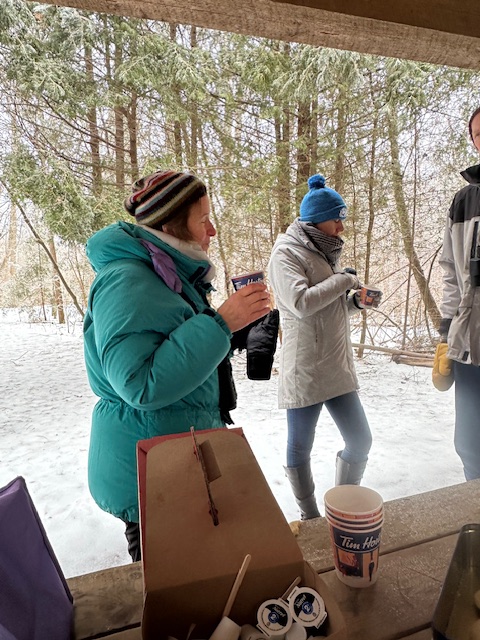
A fun moonlit night in the woods on November 6, 2025, for 32 seekers! The Ingersoll District Nature Club led an Owl Prowl in the Lawson Nature Reserve for young people from Mt. Elgin 4H and seniors from the Outdoor Club, Ingersoll’s Senior Centre. We were rewarded with seeing a screech owl doing a flyby, as well as hearing two calling. Big thanks to Dave Baird for leading the event. The Beaver Moon lit our way in spectacular fashion!

Why You Should Never Throw Away Fallen Leaves

The Royal Horticultural Society, the UK’s leading gardening charity, has a great reason to not throw away your fallen leaves. Instead, you should rake them up and turn them into leafmould. Fallen leaves protect bare soil from the extremes of winter weather, and when they break down into the soil, they act like a superpowered fertilizer. They also provide much needed shelter for wildlife during the colder months.

Watch the full video on their Instagram channel.