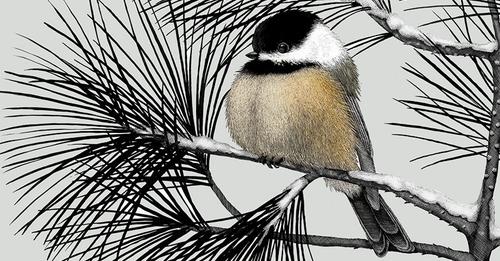
How do birds cope with cold winter temperatures? How do they find food in the snow, and how do they make it through long, freezing nights? Check out some of their secrets in this article from Living Bird magazine.

How do birds cope with cold winter temperatures? How do they find food in the snow, and how do they make it through long, freezing nights? Check out some of their secrets in this article from Living Bird magazine.
This is a big deal: Federal Environment Minister Steven Guilbeault is tasked with establishing 10 new National Parks and 10 new National Marine Conservation areas over the next five years by working with First Nations and the provinces/territories, and 15 new National Urban Parks by 2030 (the 7910 hectare Rouge National Urban Park in Toronto that protects important tracts of highly endangered Carolinian ecosystems is the first example of this new designation).
Currently there are 47 national parks, 5 national marine conservation areas, and 1 national urban park in Canada.
Of any major protected area designation in Canada, National Park units are generally the largest (which is key to sustain the long-term ecological integrity of their ecosystems) with the highest protection standards and the greatest investment in conservation resources.
The federal government is also aiming to expand/create 22 National Wildlife Areas across Canada by 2030 (some current examples this type of designation include Vaseux Lake-Bighorn and Widgeon Slough in BC; Last Mountain Lake in Saskatchewan; and Long Point in Ontario).
These federal protected areas are part of the federal government’s plan to ensure the protection of 25% by 2025 and 30% by 2030 of the land and marine areas in Canada (currently 12% of Canada’s land area is protected and 14% of the marine waters have different levels of protection).
However, to reach these targets, most protected areas must be established by the provinces (which will generally be Provincial Parks and Indigenous Protected and Conserved Areas, such as Provincial Conservancies in BC), since even the establishment of all the aforementioned federal protected areas designations (which still need provincial buy-in) will come up far short in meeting Canada’s protected areas targets.
That is, the key stumbling block to expanding the protected areas system in Canada are the provinces (with the exception of Quebec, whose commitments match and in some ways exceed those of the federal government) who generally have not embraced the federal protected areas targets and agenda nor have they provided their share of key funding to make it happen.
The federal government is currently using “carrots” ie. federal funding, to try to help foster provincial buy-in to expand protected areas – but the time is coming that the provinces need to be strong-armed to hurry up now after years of being conservation laggards and to get on board the national and international conservation momentum, as the protection of nature is a key remedy to the extinction and climate crises that none of us will escape.
We will be playing an important role in that effort to bear-down pressure on the provinces shortly, and will need YOUR help! Watch for upcoming calls to action!

There’s something stunning about a bright-red male cardinal against a snowy backdrop. Is it just the contrast that makes them look so brilliant, or are they really brighter in winter? The answer has to do with some peculiarities in the way the birds molt.
Read the full answer from Cornell Lab of Ornithology’s All About Birds.
With provincial and municipal elections on the horizon in 2022, the opportunity exists to let aspiring candidates know that wetlands matter and that people concerned about them will vote accordingly.

Read how the will of the people superseded the desire of the corporation in a blog post on Ontario Nature’s website about the battle against the Walker landfill, written by IDNC’s Sheila Fleming. https://ontarionature.org/ingersoll-nature-community-vs-megalandfill-blog/. This blog was originally published by Ontario Nature.
The WWF wants to help you do your part in shaping a healthier planet and brighter future for all. They’ve put together a series of 5-week challenges – sent directly to your inbox – that will empower you with simple yet impactful everyday tips to live more sustainably, protect our planet’s habitats, preserve its biodiversity, and fight against climate change! Every action adds up, no matter where you are – and you too can go from Zero to Planet Hero today! Find out more at https://explore.panda.org/zero-to-hero

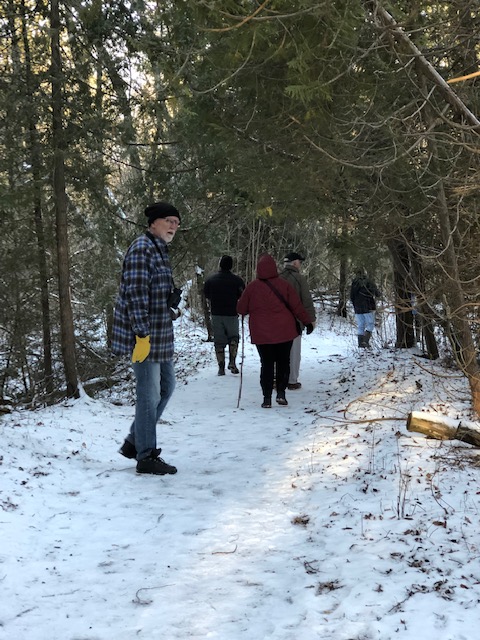

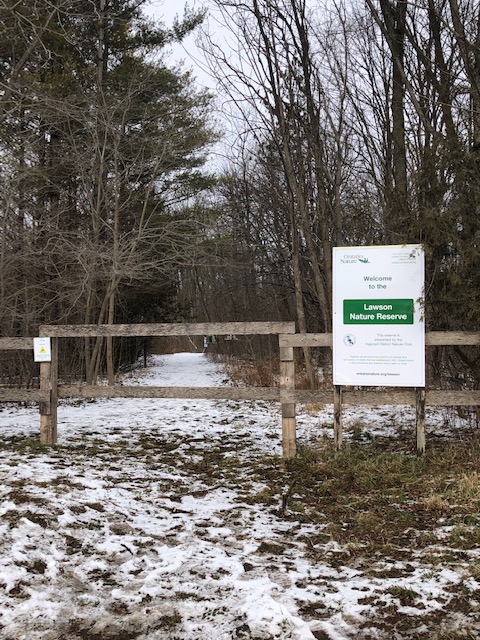
Thanks are extended to the nine club members who participated in this year’s annual Christmas Bird Count, held on December 28. Sightings of 12 species from the two and a half hour walk are noted below along with count numbers from December 2017 to 2020, for comparison. There was little activity in the Reserve. It was 4 degrees above, sunny with minimal wind. December saw little snow accumulation.
| Species | 2021 | 2020 | 2019 | 2018 | 2017 |
| American Goldfinch | 15 | 10 | 9 | 35 | 17 |
| Northern Cardinal | 0 | 8 | 0 | 13 | 9 |
| Dark-Eyed Junco | 13 | 18 | 0 | 7 | 36 |
| American Tree Sparrow | 0 | 0 | 0 | 0 | 1 |
| White-crowned Sparrow | 0 | 1 | 0 | 0 | 0 |
| Brown Creeper | 0 | 1 | 2 | 0 | 2 |
| White-breasted Nuthatch | 4 | 6 | 9 | 11 | 9 |
| Red-breasted Nuthatch | 0 | 6 | 0 | 0 | 0 |
| Black-capped Chickadee | 44 | 25 | 19 | 43 | 23 |
| American Crow | 80 | 10 | 9 | 5 | 3 |
| Blue Jay | 8 | 14 | 1 | 5 | 18 |
| Mourning Dove | 2 | 3 | 3 | 1 | 11 |
| Canada Geese | 0 | 24 (in-flight) | 1 | 45 | 22 |
| Herring Gull | 0 | 0 | 8 | 1 | 0 |
| Hairy Woodpecker | 0 | 0 | 0 | 1 | 0 |
| Downy Woodpecker | 2 | 5 | 4 | 12 | 9 |
| Red-bellied Woodpecker | 1 | 4 | 5 | 3 | 4 |
| Pileated Woodpecker | 0 | 1 | 0 | 0 | 0 |
| Ducks (unidentified) | 0 | 0 | 0 | 15 | 0 |
| Red-tailed Hawk | 0 | 0 | 0 | 1 | 0 |
| Rough Legged Hawk | 0 | 1 | 0 | 0 | 0 |
| Harrier Hawk | 0 | 0 | 1 | 0 | 0 |
| Coopers Hawk | 0 | 1 (in flight) | 1 | 0 | 0 |
| Starlings | 0 | 0 | 15 | 0 | 0 |
| Great Horned Owl | 0 | 1 | 1 | 0 | 0 |
| Bald Eagle | 0 | 0 | 1 | 0 | 0 |
| Rock Pidgeons | 0 | 0 | 20 | 0 | 0 |
| Raven (heard, not seen) | 0 | 1 | 0 | 0 | 0 |
| Flicker | 1 | 0 | 0 | 0 | 0 |
| Sparrow (Sp) | 1 | 0 | 0 | 0 | 0 |
| House Sparrows | 3 | 0 | 0 | 0 | 0 |
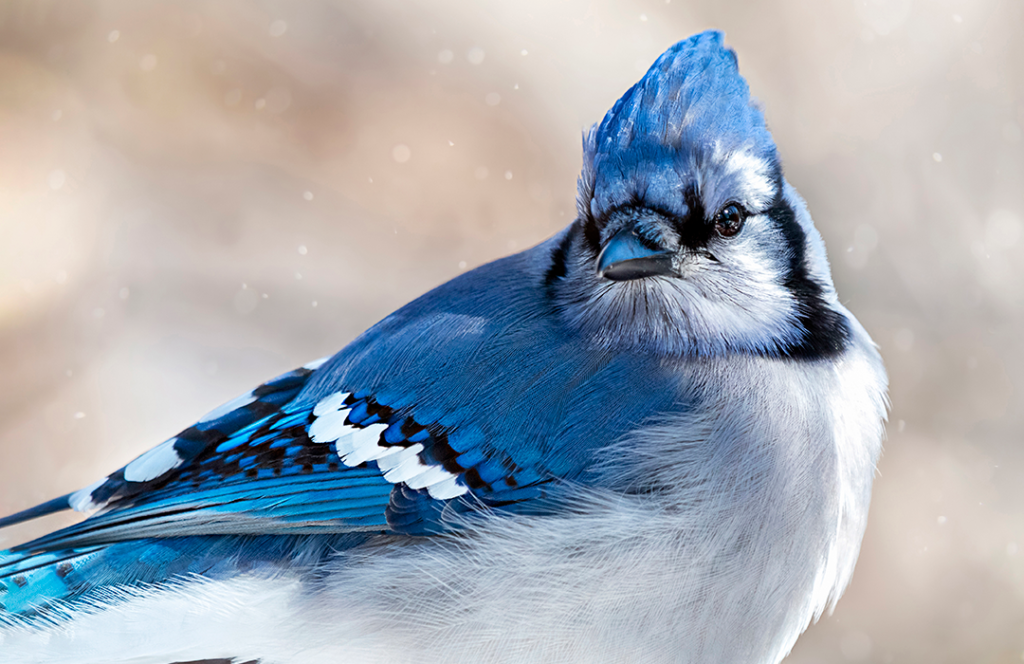
Blue jays are one of the most recognized birds in Canada and even have a baseball team named after them! These birds can be found across a variety of habitats—from wooded forests in Southern Canada to Texas and Florida. Learn more from Nature Canada.
Thanks to the 12 volunteers who came out to the Lawson Nature Reserve on November 6, 2021 to rebuild the bridge and help reroute the Edwards Trail. It now runs up the ridge to avoid the increasing encroachment of water on the northeast corner. Thanks to Ontario Nature and Zane for the expertise on trail construction.
Originally posted on the Oxford County Trails Council Facebook page.
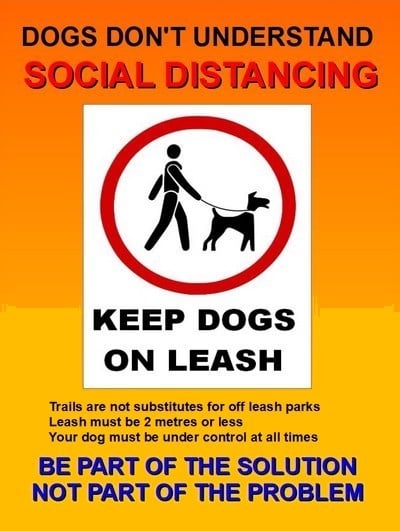
BYLAW AMENDED: Due to the high number of dog instances, The Township of South-West Oxford has increased the fines if your dog attacks or bites anyone or another animal to $1000. Please keep your dogs on a leash and pick up after them. Respect the rights of others to enjoy the trail who are not dog people.
Animal Care and Control By-law 76-2017 to establish a set fine in the amount of $1,000 per occurrence if a person fails to prevent their dog from attacking or biting a person or domestic animal. Enforcement staff may issue a ticket to the dog owner if or when an incident occurs. Additional charges may be brought upon the owner as per the provincial Dog Owner’s Liability Act. It is the responsibility of dog owners to ensure their dog remains under their control at all times, and does not bite or attack.</p
 Ingersoll District Nature Club