
The David Suzuki Foundation is calling for a ban of “Neonic” Pesticides. Read more about it and add your voice to this initiative at http://action2.davidsuzuki.org/neonics
Smith’s Pond Park Project – Heart FM Story
Check out Heart FM’s great story on our Smith Pond Park project which takes place on Wednesday, June 24.
Smith’s Pond Park in Ingersoll will soon have a Butterfly/Pollination Garden thanks to some local students.
This Week’s Endangered Species in Focus: Round Pigtoe (Pleurobema sintoxia)
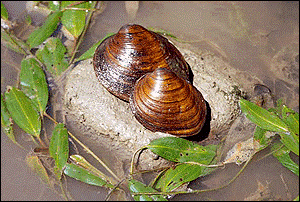
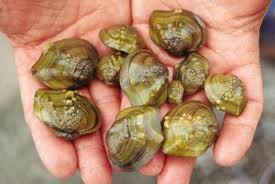
Description:
The Round Pigtoe is one of Canada’s 54 freshwater mussel species, it is a medium to large-sized freshwater mussel that may reach 13 centimetres in length. Adults have a thick, solid, mahogany-coloured shell with dark bands. Juvenile shells are tan with green lines. This species develops growth rings as it ages, which resemble those of a tree stump.
Status: Endangered Provincially and Nationally
Important Dates:
June 30, 2008: Species listed at Risk
June 30, 2013: Species granted Habitat Protection
Range:
- In Ontario, it is found in the Grand, Thames and Sydenham rivers, found around Walpole Island in Lake St. Clair, and shallow areas along the shorelines of Lake Erie.
Habitat:
- Lives in a wide range of habitats, from small rivers in area of moderate flow with gravel, cobble and boulder bottoms, to larger rivers in mud, sand and gravel at varying depths;
- Its breeding season lasts from early May to late July and the larvae are released before winter;
- Like all freshwater mussels, this species feeds on algae and bacteria that it filters out of the water;
- Mussel larvae are parasitic (an animal or plant that lives in or on another (the host) from which it obtains nourishment) and must attach to a fish host – some known hosts are Bluegill, Spotfin Shiner and Bluntnose Minnow
Threats:
- Introduction and spread of the Zebra Mussel throughout the Great Lakes severely reduced or eliminated the Round Pigtoe in Lake St. Clair, Lake Erie and the Detroit and Niagara rivers;
- Decreased water quality from pollution continue to threaten the round pigtoe
Protection:
- Under the Ontario Endangered Species Act, the Round Pigtoe is protected against threat of being killed, collected, possessed, sold or traded;
- Under SARA (Species at Risk Act), a recovery strategy and an action plan have been developed to prevent the loss and maintain/return healthy self-sustaining populations of the Round Pigtoe
What You Can Do To Help:
- Help improve mussel habitat by maintaining natural vegetation next to creeks and rivers. The roots of the plants reduce erosion and can stop soil from washing into the river;
- Fence off streamside areas to keep cattle (and their manure) out of the water;
- Volunteer with your local nature club or provincial park to participate in surveys or stewardship work focused on species at risk
FUN FACTS:
- Round Pigtoe eggs hatch inside a special pouch in the mother’s gills called a marsupium, where the larvae are supported before being ejected into the water;
- Mussel larvae have a very low survival rate, so mussels will produce a lot of larvae – often over a million;
- Mussels rely on a lot of good luck in order to reproduce. Males release sperm into the water, and if there happens to be a female nearby, she will capture the sperm as she filters water for food;
- Mussels are indicators of environmental health. Since they have a complex life cycle, are long-lived species (some can live up to 100 years!), and eat by filtering water and its pollutants, mussels can provide a snapshot of how healthy our waterways are.
Reminder: Community Pitch-In Day at Lawson Nature Reserve
Don’t forget, you can do your part for your community this Saturday (June 7) from 9:00 am-12:00 noon by joining us at the Lawson Nature Reserve at 363685 McBeth Road, Salford, Ontario.
Ingersoll District Nature Club members will continue their stewardship at the Lawson Nature Reserve with trail maintenance. All ages are welcome to join us and remember – a day spent helping nature is so worthwhile.
For more information, contact Sheila at 519-485-2645.

Endangered Species in Focus: American Badger (Taxidea taxus)
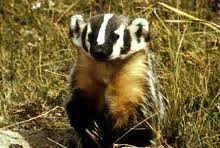
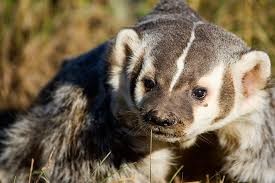
Description:
These nighttime loving carnivores are short and stocky with distinctive black and white markings on their face. The American Badger is relative of the weasel family and is the only type of badger that lives in North America. Large males weigh up to 26 lbs.
Badgers are built for digging. Their dens can be up to 3 metres underground and contain up to 10 metres of tunnels, with a large chamber for sleeping. Badgers have long strong claws and a streamlined skull enabling them to create these dens and dig prey out of burrows, such as groundhogs, squirrels, chipmunks, rabbits and mice.
Solitary for most of the year, adult males and females only get together to mate in late summer, when females are in peak condition and are most fertile.
Status:
- Endangered Provincially and Nationally
Important Dates:
June 30, 2008: Species listed as endangered
Feb. 18, 2010: Species granted habitat protection
Range:
- Ranges from California and Texas to the Great Lakes region. In Canada, the badger is found in southern British Columbia, all the prairie provinces and Ontario;
- In Ontario, the badger is found primarily in the southwestern part of the province, close to Lake Erie. There are thought to be fewer than 200 in Ontario;
- They have very large territories for their size; some badger families can range over several thousand acres to find enough food.
Habitat:
- Found in a variety of habitats, such as tall grass prairies, sand barrens and farmland;
- Since badgers are primarily nocturnal and quite wary of people, not many people are fortunate enough to spot one in the wild. They are often on the move and will usually only stay in one area for a few nights before moving on;
- Badgers need habitats with deep top soils. This makes it easier for them to burrow and make dens.
Threats:
- They have few natural enemies in Ontarion (possibly coyotes), and the main threats are habitat loss and susceptibility to being hit by cars;
- Populations used to be as big as 20,000 individuals in some areas; however, badgers are losing their homes rapidly as land is cleared for farms and houses
What You Can Do to Help:
- Badgers depend on healthy grassland habitat such as tallgrass prairie. Unfortunately, tallgrass prairie is increasingly rare throughout the province. Visit Tallgrass Ontario’s website here to learn more;
- At EarthRangers.com you can start a fundraising campaign that will support environmental education and conservation efforts to help – this project will support the installation of signs along trails around Lake Erie, which will raise awareness to the American Badger;
- If you find a badger den on your property, you may be eligible for stewardship programs that support the protection and recovery of species at risk and their habitats;
- Visit the following links to learn more about the American Badger:
o American Badger Ontario Recovery Strategy Series
o Species at Risk Public Registry
o Animal Diversity: University of Michigan Museum of Zoology
FUN FACTS:
- Badgers have a second eyelid which can be closed to protect their eyes from dirt. This eyelid is called the “nictitating membrane”
- If cornered, the American badger will growl, squeal, and show their teeth. When threatened, badgers release a foul smelling musk to drive off enemies;
- The den of the badger only has one entrance. That way, if the animal feels threatened, it will back into the den;
- Badgers are mainly nocturnal, but seldom can be seen in the day;
Endangered Species In Focus: The Rusty-Patched Bumble Bee
This Week’s Endangered Species In Focus: Rusty-Patched Bumble Bee (Bombus afinis)

Description:
The Rusty-patched bumble bee is a medium to large bee, ranging from about one to two centimetres long with queens being at the higher end of this range. Like most bumble bees, it is yellow and black, but males and workers have a distinctive rusty-coloured patch on their abdomen.
Important Dates:
Sept. 28, 2010: listed as endangered
Jan. 1, 2014: granted habitat protection
Range:
- Once widespread and common in eastern North America, found from southern Ontario south to Georgia and west to the Dakotas;
- Suffering rapid decline since 1970’s, only a handful have been collected in Ontario in recent years. The only sightings of this bee in Canada since 2002 have been at the Pinery Provincial Park on Lake Huron.
Habitat:
- Like other bumble bees, they can be found in open habitat such as mixed farmland, urban setting, savannah, open woods and sand dunes;
- Found in variety of flowering plants in bloom from April to October, with the peak population in July – September;
- During winter hibernation the bumble bee will be found in underground rodent burrows or fallen deadwood;
Threats:
- Suspected causes include pesticide use and the spread of disease from bumble bees used to pollinate greenhouse vegetable crops;
What You Can Do to Help:
- Pollinators, such as bees, are in steep decline across the globe and they play a key role in the survival of many of Ontario’s rare plants. For more information on how you can help scientists track pollinator pollinations visit: www.seeds.ca/proj/poll
- To provide nectar and pollen for bumble bees, plant a variety of native flowering plants in your garden. Bees tend to prefer pink, purple and yellow flowers;
- Visit the Rusty-patched Bumble Bee Project on Facebook here ;
- Attend our free community event titled “Decline of the Honey Bee” scheduled for June 10, 2014 at 7:00 p.m. at the UNIFOR Hall on Victoria Street (further details here)
Fun Facts:
- Only 3 specimens of the Rusty-Patched Bumble Bee have been found in Southern Ontario over the last 6 years;
- This type of bumble bee gets it nectar from “nectar-robbing” (biting a hole in the outside of flowers and sucking the nectar up through its tongue), this technique leaves marks in the flower allowing experts to detect their presence;
- Bumble bees perform “buzz pollination”, in which the bee grabs the pollen-producing plant in its jaws and vibrates its wings causing vibrations that dislodge pollen that would have been trapped otherwise. Some plants, including tomatoes, peppers, cranberries and onion seed require “buzz pollination”;
- Bumble bees carry ‘pollen baskets’ on their hind legs;
- The female bumble bee is naturally docile and will only sting when its colony is disturbed or they are concerned;
- Check out the Guide to Distinguishing a Rusty-Patched Bumble Bee here
See Nature Through A Different Lens – May 31

(EVENT NOTICE) Decline Of The Honey Bee – June 10

This Week’s Endangered Species In Focus: Rapids Clubtail
WEEK 12 Species:
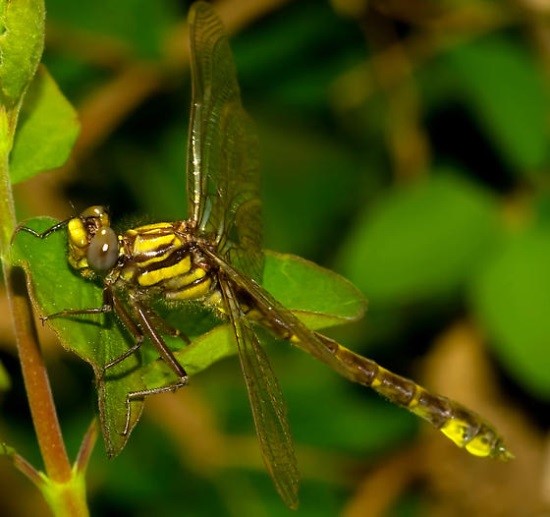
Rapids Clubtail (Gomphus quadricolor)

Description:
The Rapids Clubtail is a small (42 to 45 millimeter-long), brightly coloured dragonfly. Its eyes are bluish-green, with a light yellowish-green face that is striped with two dark lines, a brownish-black and yellowish-green striped body and transparent wings.
- Like all dragonflies, it begins as an aquatic larva and transforms into winged adult in the summer
- Rapids fly from late spring through early summer and adults feed on small flying insects
Important Dates:
Sept. 10, 2009: Listed as Endangered
July 1, 2012: Granted Habitat Protection
Range:
The Rapids Clubtail is found throughout eastern North America. Within this range the species and its habitat are locally distributed and there are large areas where the species does not occur.
- Mostly located in the U.S. Midwest, but range extends from northern Alabama and Georgia to southern Ontario, and from Maine to eastern Minnesota.
- In Ontario, the Rapids Clubtail has only been found in four rivers in southern Ontario: the Thames, Humber, Credit and Mississippi
Habitat:
- Typically found in clear, cool medium-to-large rivers with gravel shallows and muddy pools.
- Larvae occupy quiet muddy pools
- Adult males perch on exposed rocks and other projections in the rapids – males are quite territorial and make short flights over the water, repeatedly returning to the same perch.
- Adult females typically inhabit forests along riverbanks, and only visit shallows and pools when they are ready to mate and lay eggs.
Threats:
- The primary threat to the Rapids Clubtail is the degradation of river habitats;
- Activities which impede or alter the quantity and quality of water in the rivers, such as dams and pollution pose threats
Protection:
- A recovery strategy and a species-specific habitat regulation are being developed
o Recovery strategy: a recovery strategy provides the best available scientific knowledge on what is required to achieve recovery of a species.
- Rapids Clubtail has also been assessed nationally as endangered by the federal Committee on the Status of Endangered Wildlife in Canada (COSEWIC)
What You Can Do to Help the Rapids Clubtail:
- Soil erosion and runoff is a source of pollutants such as fertilizers and pesticides to watercourses in Ontario;
Fun Facts:
- Adult Rapids Clubtails only live for three to four weeks, between early June and mid-July;
- Larvae ‘breathe’ through the exposed tip of their abdomen when buried under a fine layer of sediment;
- The most significant predator of Rapids larvae are fish, larger dragonflies and spiders
Protecting Ontario’s Endangered Species – What Can YOU Do To Help?
Protecting Ontario’s Endangered Species – What Can YOU Do to Help?
In honour of Endangered Species Day on May 16, 2014 (established in 2006), Ingersoll District Nature Club will take a moment to highlight the endangered species in Oxford County, and inform you on how you can participate in their protection.
You may have noticed our ‘Endangered Species in Focus’ column under the News & Updates ; this is where we focus on a particular endangered species each week and provide you with facts on that specific species.
Below is a list of 30 (thirty) Endangered Species, Threatened Species and Species of Special Concern in OXFORD COUNTY:
|
ENDANGERED & THREATENED SPECIES OF OXFORD COUNTY |
|||
| SPECIES | STATUS | SPECIES | STATUS |
|
BIRDS |
|||
| Acadian Flycatcher | ENDANGERED | Eastern Meadowlark | THREATENED |
| Barn Swallow | THREATENED | King Rail | ENDANGERED |
| Bobolink | THREATENED | Least Bittern | THREATENED |
| Cerulean Warbler | THREATENED | Loggerhead Shrike | ENDANGERED |
| Chimney Swift | THREATENED | Yellow-Breasted Chat | ENDANGERED |
|
FISH |
|||
| Black Redhorse | THREATENED | Northern Brook Lamprey | SPECIAL CONCERN |
| Silver Shiner | THREATENED | ||
|
INSECTS |
|||
| Laura’s Clubtail | ENDANGERED | Rapids Clubtail | ENDANGERED |
| Rusty-Patched Bumble Bee | ENDANGERED | ||
|
MAMMALS |
|||
| American Badger | ENDANGERED | ||
|
MUSSELS |
|||
| Round Pigtoe | ENDANGERED | Wavy-Rayed Lampmussel | THREATENED |
|
PLANTS |
|||
| American Chestnut | ENDANGERED | Green Dragon | SPECIAL CONCERN |
| American Columbo | ENDANGERED | Large Whorled Pogonia | ENDANGERED |
| Eastern Flowering Dogwood | ENDANGERED | ||
|
SNAKES |
|||
| Eastern Ribbon Snake | SPECIAL CONCERN | Milksnake | SPECIAL CONCERN |
|
TURTLES |
|||
| Blanding’s Turtle | THREATENED | Snapping Turtle | SPECIAL CONCERN |
| Northern Map Turtle | SPECIAL CONCERN | Spiny Softshell Turtle | THREATENED |
–
– Be sure to check back weekly for further elaboration on the species indicated above
What is an Endangered Species?
- A species at risk of extinction because of human activity, changes in climate, changes in predator-prey ratios, etc., especially when officially designated as such by a governmental agency.
What is a Threatened Species?
- A species at risk of becoming endangered in the near future. A threatened species may have a declining population or be exceptionally rare.
What is a Species of Special Concern?
- A species that may become a threatened or endangered species because of a combination of biological characteristics and identified threats.
WHY SHOULD WE PROTECT ENDANGERED SPECIES??
- Plants and animals hold medicinal, agricultural, ecological, commercial and aesthetic/recreational value. Our quality of life and that of future generations depends on our preservation of plant and animal species;
- As species are lost, so are the options for future discovery and advancement;
- More than 20 million Canadians spend billions of dollars a year to practice “nature” activities such as mountain hiking, camping, fishing, hunting, photography, bird watching and visits to zoos or nature centres.
Did You Know?
- We live in a province with over 30,000 species of plants and animals, but more than 200 of those species are in trouble;
- Approximately 3079 animals and 2655 plants are endangered worldwide
- Of the 150 medicines most frequently prescribed, about 100 are derived from plants – more than 3 million heart disease sufferers would perish within 72 hours of a heart attack without digitalis, a drug from the plant called purple foxglove (Digitalis Purpurea);
- Millions of birds die every year because of collisions with windows. You can help by simply by placing window decals on your windows.
What Can YOU Do?
1) Learn about endangered species in your area
- Teach your friends and family about the wonderful wildlife, birds, fish and plants that live near you. The first step to protecting endangered species is learning about how interesting and important they are!
- The will to protect animals and nature in general demonstrates the value of society – Click the links in the above chart to start your discovery on the endangered species of Oxford County!
2) Visit, Become a Member, Participate or Volunteer at your local Conservation Area or Nature Space
- These protected lands provide habitat to many native wildlife, birds, fish and plants;
- Visit the Ministry of Natural Resources Webpage and learn more about the Stewardship Youth Ranger Program here
- The members of Ingersoll District Nature Club are the formal stewards of the Lawson Nature Reserve Ingersoll, Ontario – find directions here
- Plan a ‘Nature Day in Oxford County’ and visit one of the many sites listed here
3) Contact the Ministry of Natural Resources when you encounter an endangered species
- The Ministry of Natural Resources (MNR) provides an online form here to report your sightings to the Natural Heritage Information Centre. Photographs with specifics (ie. location, coordinates, viewing patterns, etc.) provide helpful assistance;
- Private land owners have a very important role to play in species recovery. You may be eligible for stewardship programs that support the protection and recovery of species at risk and their habitats. The will to protect animals and nature in general demonstrates the value of society
4) Start at Home
- Reduce the use of water in your home and garden so that animals living in or near water can have a better chance of survival;
- Use energy saving lights and appliances. Recycle – Keep trash out of the environment;
- Use fewer pesticides and herbicides that are harmful to endangered species. Be a smart consumer – don’t buy illegal products that harm endangered species;
- Plant native vegetation for wildlife habitat. This helps keep invasive species out;
- If you have friends that live on farms, encourage them to keep patches of bush as wildlife habitats and to leave old trees standing, especially those with hollows suitable for nesting animals
 Ingersoll District Nature Club