Support The Piping Plover Habitat at Wasaga Beach

From Ontario Nature:

Spring is arriving at Wasaga Beach, and with it comes an urgent moment for piping plovers.

Nearly 70% of Ontario’s piping plovers nest at Wasaga Beach, making this iconic shoreline one of the most important places in the province for the species’ survival. Weakening protections here could have serious consequences just as these small shorebirds return for nesting season.

Spread awareness by sharing this post and our blog to help educate others about piping plovers and the importance of keeping strong protections in place at Wasaga Beach.

Read our blog about the risk to piping plovers at Wasaga Beach.

The Science Behind the Blue of the Blue Jay

From The Mill Pond, Dorchester, Ontario:

Blue jays are one of the most recognizable birds in Canada, especially in Ontario. Their vibrant blue feathers make them a favorite among birdwatchers and backyard nature lovers. But here’s a surprising fact: blue jays aren’t truly blue.

The Science Behind the Blue

At Toronto and Region Conservation Authority’s (TRCA) Tommy Thompson Park Bird Research Station (TTPBRS), our bird migration monitoring program helps reveal fascinating insights.

Despite their name and appearance, blue jays don’t have blue pigment in their feathers. Instead, their color comes from a phenomenon called structural coloration — a fascinating trick of physics.

Each feather contains microscopic grooves and ridges spaced precisely to reflect blue wavelengths. When light hits these structures, it bounces back as blue — not because of pigment, but because of how the light is manipulated. If you backlight a blue jay feather, it appears grayish brown, revealing the melanin underneath 💚

Info… @Torontoandregionconservationauthority

The Thinning Sky: The Accelerating Silence of The North American Canopy

From Voices of the Wild Earth:

We are not just witnessing a fluctuation; we are witnessing a vanishing act where one in four birds has disappeared in a single human generation.

As the sun rises on March 2nd, the first “Vanguard” migrants—cranes, blackbirds, and meadowlarks—are making landfall in the United States. But the headlines from the Washington Post confirm a data-driven tragedy: North America’s birds are dying off at an ever-faster rate. The iridescent blue of the Indigo Bunting, currently preparing for its flight from the Caribbean, is becoming a rarer sight in our summer brushlands.

1️⃣ THE MYTH: “POPULATIONS NATURALLY FLUCTUATE”

There is a persistent cultural misconception that bird declines are merely part of a “natural cycle” of boom and bust. We assume that because we still see birds at our feeders, the ecosystem is intact.

The scientific reality is a net loss of 2.9 billion birds since 1970. This isn’t just a loss of rare species; it is the “thinning” of the common—the sparrows, the warblers, and the buntings that form the backbone of our biodiversity.

2️⃣ THE SCIENTIFIC REALITY: THE ACCELERATING DECLINE

The latest decades of observations from across the continent reveal a disturbing trend:

Grassland Collapse: Meadowlarks and other grassland specialists have seen a 53% population decline, the steepest of any avian guild.

Neotropical Hazards: Migrants like the Indigo Bunting face a “double jeopardy”. They face habitat loss in the tropical forests where they spend the winter, and pesticide-heavy agricultural “deserts” in the North where they attempt to breed.

Trophic Mismatch: Rising temperatures are causing insects to hatch earlier, often before the long-distance migrants arrive, leaving parents unable to find the caterpillars needed to feed their young.

3️⃣ WHAT IS HAPPENING RIGHT NOW (MARCH 2)

In the forests of Central America and the Caribbean, millions of songbirds are currently in the “Hyperphagia” stage.

The Weight Race: An Indigo Bunting is currently gorging on seeds and early fruit to deposit fat in its “furcular pit” (the hollow above the wishbone).

The Continental Dispersal: While the Buntings wait, the Eastern Meadowlark is already on its breeding grounds in the Southern US, establishing territories this very morning. Every fence post claimed today by a Meadowlark is a victory for a guild that is struggling to hold its ground.

4️⃣ WHY IT IS ECOLOGICALLY CATASTROPHIC

Birds are the “mobile links” of our ecosystems.

Pest Regulation: A single warbler or bunting consumes thousands of insects a month. Their decline leads to increased agricultural pests and the overuse of chemical pesticides.

Seed Dispersal: They are the primary architects of our forests, moving seeds and cross-pollinating plants over thousands of miles.

Sentinel Health: Their accelerating decline is an early-warning signal for a landscape that is losing its resilience.

5️⃣ GESTURES FOR TODAY: HEALING THE FLYWAY

We can mitigate the decline by changing the management of our “personal landscapes”:

Convert Your Lawn: This week, plan to replace a portion of your lawn with native grasses and meadow flowers. Meadowlarks and Buntings need “messy” edges, not sterile turf.

The Window Strike Sweep: As migration begins, more birds will hit windows. Install bird-safe decals or screens on your high-risk windows today.

Ditch the Pesticides: Every insect killed by a pesticide is a calorie stolen from a migrating bird. Let the birds be your pesticide.

6️⃣ CONCLUSION

The decline of North American birds is a silent emergency that demands an audible response. When we lose the Indigo Bunting or the Meadowlark, we don’t just lose a song; we lose a functional piece of the machinery that keeps our continent alive. This March, as the waves of migrants begin to surge, let’s ensure they find a landscape that is ready to welcome them back.

📚 SCIENTIFIC REFERENCES & DATA

Population Decline: The 3 Billion Birds study (Rosenberg et al., 2019) published in Science documents the loss of 29% of the North American avian population since 1970.

Grassland Metrics: Data from the USGS Breeding Bird Survey (BBS) confirms that grassland birds are the most threatened guild in North America.

Migration Timing: The Cornell Lab of Ornithology (BirdCast) radar data tracks the specific entry points of early-season migrants across the lower 48 states during early March.

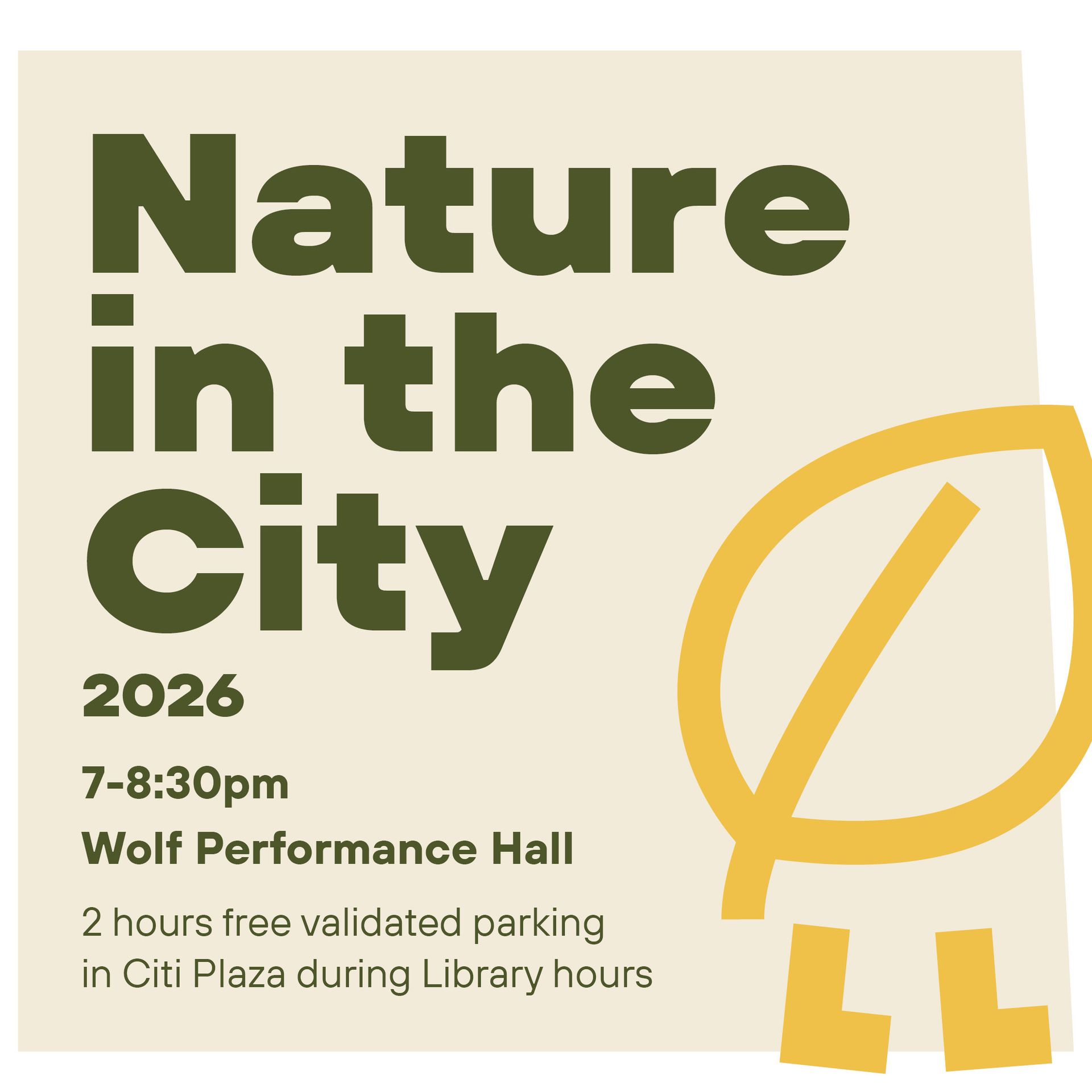
Nature In the City Event – March 3, 2026

From London Public Library:

Nature is closer than you think. 

Join the London Public Library for the final event in their Nature in the City series as local nature photographer Brian Lasenby explores the remarkable birdlife found in London. With more than 300 species recorded in the city, this talk highlights both the beauty of urban birds and the importance of protecting their habitats.

 March 3, 7-8:30 p.m.

 Wolf Performance Hall

Nature Nearby Campaign Helps Grow Conservation Efforts

From Thames Talbot Land Trust:

Did you know that in southern Ontario, only around 1% of original grassland habitats remain due to stressors like human activity and climate change? Land that was largely covered in grasses, sedges, and wildflowers, and prevented soil erosion, stored carbon, and provided vital habitat for pollinators is now one of the rarest habitat types in southern Ontario.

With the Nature Nearby campaign, your support helps fund projects like meadow and prairie protection and restoration. TTLT currently protects around 195 acres of meadow habitat with plans to protect and restore another 48 acres (and counting) in the near future!

The addition of one of our newest nature reserves, MapleCross – Bass Woods, provides an additional 3 acres of rare meadow habitat. Though that may sound small, every little piece is important in creating a network of permanently protected habitats for all living beings!

Let’s grow conservation together, to ensure that nature is always nearby! Support nature today by donating at https://www.thamestalbotlandtrust.ca/donations ! 🌱

Nature Canada Launches Online Auction

From Nature Canada:

Today’s the day! We’re launching our online auction, ‘Together for Nature’ and hope you’ll check out the amazing nature experiences and artwork chosen just for you!

The Auction runs from February 17th to March 3rd, 2026 to celebrate World Wildlife Day – a day to draw awareness of the need to protect and defend species at risk globally. What a great way to help protect species and nature across Canada by checking out and bidding on items found on our Together for Nature online auction page.

It’s a win-win, you can help nature and enjoy some amazing items and experiences at the same time!

Bid now! https://app.galabid.com/nc2026/items

Organizations Partnering To Save Turtles

Posted by Scott Gillingwater:

AISIN Canada has partnered with Southern Ontario At Risk Reptiles (SOARR) and the Upper Thames River Conservation Authority over the past five years. Not only has AISIN Canada provided consistent funding, necessary for our work to continue, but they have also provided dozens of their own staff for on-the-ground stewardship work. Very few companies go the extra mile like AISIN has, and we can’t thank them enough for everything they’ve done. Their actions have resulted in the creation of critical wildlife habitat, the maintenance of nesting sites, the protection of eggs and release of hundreds of hatchling endangered Spiny Softshell Turtles. This is what community involvement and staff engagement can do for the environment. Thank you to Wayne, Sophie, Tyler, Bill, Rosanne and all of the AISIN staff.

Re-Empower Conservation Authorities

From Ontario Nature:

Join us in calling on Minister McCarthy and your MPP to re-empower conservation authorities and sign our petition:

https://ontarionature.good.do/conservation-authorities/petition/

Unique to Ontario, conservation authorities holistically manage watersheds to prevent flooding, conserve natural areas and safeguard water quality – all benefitting both people and the environment. This work requires local connections to the communities they serve.

Conservation authorities also prevent over $150 million in flood damage and disruptions each year.

However, a series of changes to their mandate, resourcing and independence have made it harder for conservation authorities to fulfill their crucial role. Among these changes is the provincial government’s plans to consolidate Ontario’s 36 conservation authorities into seven sprawling regional authorities that would be overseen by a new centralized provincial agency.

If this consolidation occurs, it becomes far more likely that critical local knowledge will be excluded from key decisions, leaving communities more exposed to flooding and other environmental harms. With flooding being the costliest natural hazard in Ontario and expected to become an even greater threat in the coming years, this is a trend communities cannot afford.

Talking points toolkit to Speak up to Re-empower Conservation Authorities: https://catalog.ontarionature.org/empower-conservation-authorities/page/1