Description:
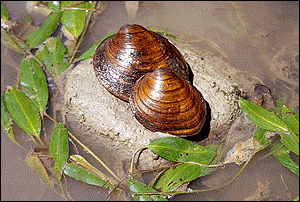
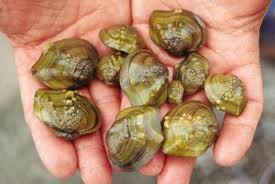
The Round Pigtoe is one of Canada’s 54 freshwater mussel species, it is a medium to large-sized freshwater mussel that may reach 13 centimetres in length. Adults have a thick, solid, mahogany-coloured shell with dark bands. Juvenile shells are tan with green lines. This species develops growth rings as it ages, which resemble those of a tree stump.
Status: Endangered Provincially and Nationally
Important Dates:
June 30, 2008: Species listed at Risk
June 30, 2013: Species granted Habitat Protection
Range:
- In Ontario, it is found in the Grand, Thames and Sydenham rivers, found around Walpole Island in Lake St. Clair, and shallow areas along the shorelines of Lake Erie.
Habitat:
- Lives in a wide range of habitats, from small rivers in area of moderate flow with gravel, cobble and boulder bottoms, to larger rivers in mud, sand and gravel at varying depths;
- Its breeding season lasts from early May to late July and the larvae are released before winter;
- Like all freshwater mussels, this species feeds on algae and bacteria that it filters out of the water;
- Mussel larvae are parasitic (an animal or plant that lives in or on another (the host) from which it obtains nourishment) and must attach to a fish host – some known hosts are Bluegill, Spotfin Shiner and Bluntnose Minnow
Threats:
- Introduction and spread of the Zebra Mussel throughout the Great Lakes severely reduced or eliminated the Round Pigtoe in Lake St. Clair, Lake Erie and the Detroit and Niagara rivers;
- Decreased water quality from pollution continue to threaten the round pigtoe
Protection:
- Under the Ontario Endangered Species Act, the Round Pigtoe is protected against threat of being killed, collected, possessed, sold or traded;
- Under SARA (Species at Risk Act), a recovery strategy and an action plan have been developed to prevent the loss and maintain/return healthy self-sustaining populations of the Round Pigtoe
What You Can Do To Help:
- Help improve mussel habitat by maintaining natural vegetation next to creeks and rivers. The roots of the plants reduce erosion and can stop soil from washing into the river;
- Fence off streamside areas to keep cattle (and their manure) out of the water;
- Volunteer with your local nature club or provincial park to participate in surveys or stewardship work focused on species at risk
FUN FACTS:
- Round Pigtoe eggs hatch inside a special pouch in the mother’s gills called a marsupium, where the larvae are supported before being ejected into the water;
- Mussel larvae have a very low survival rate, so mussels will produce a lot of larvae – often over a million;
- Mussels rely on a lot of good luck in order to reproduce. Males release sperm into the water, and if there happens to be a female nearby, she will capture the sperm as she filters water for food;
- Mussels are indicators of environmental health. Since they have a complex life cycle, are long-lived species (some can live up to 100 years!), and eat by filtering water and its pollutants, mussels can provide a snapshot of how healthy our waterways are.