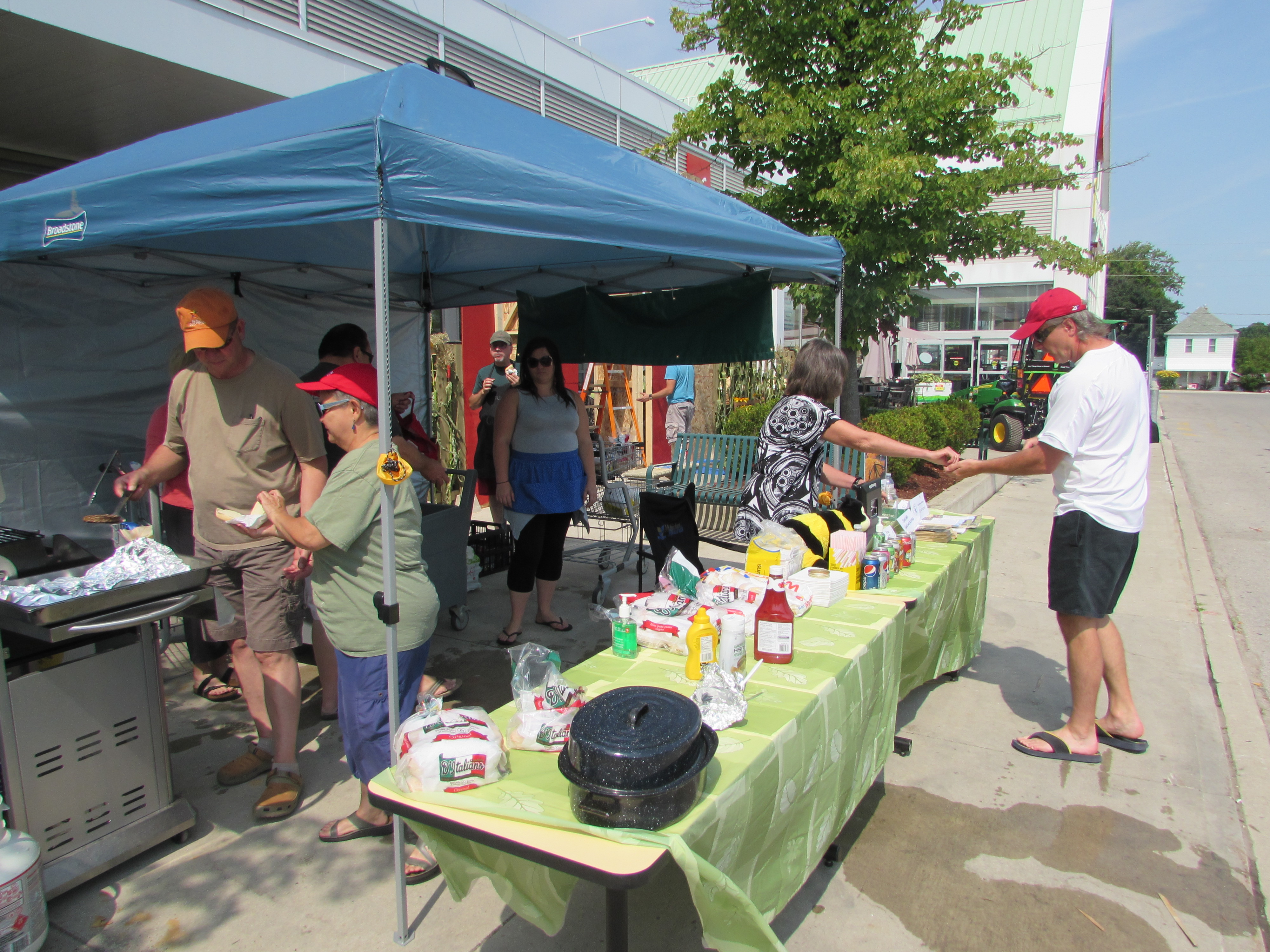
This Week’s Endangered Species In Focus: Wavy-rayed Lampmussel (Lampsilis fasciola)

lampmussel1 lampmussel2
Status: Endangered Provincially and Nationally
Description:
The Wavy-rayed Lampmussel is a medium-sized freshwater mussel. The shell of this lampmussel is yellow, or yellowish-green and has numerous thin wavy green lines (hence its name “wavy-rayed”). This species grows to a 100mm, has a lifespan of at least 10 years, but rarely more than 20 years. Spawning of the Wavy-rayed Lampmussel likely occurs in late summer and the larvae is released the following May-August.
Important Dates:

  • February 23, 2007: Recovery Strategy prepared by the Species at Risk Act – Recovery Strategy Series
  • April 2010: Species listed as a “special concern” via the Committee on the Status of Endangered Wildlife in Canada (COSEWIC)
  • February 18, 2011: Recovery Strategy back in place for the Wavy-rayed Lampmussel
  • November 18, 2011: Government Response Statement prepared (advises of actions being taken)
  • March 2013: Species listed as a “special concern” under the Species at Risk Act (SARA)

 Range:

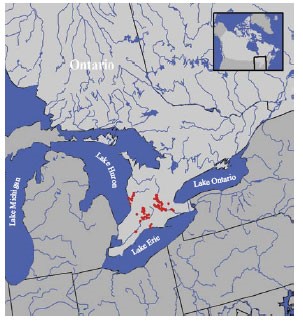
  • The Wavy-rayed Lampmussel can be found in 13 states and Ontario;
  • It can be found in much of the Ohio and Mississippi River drainages, as well as the lower great lakes and their tributaries;
  • Although this mussel was once prevalent in the rivers of southwestern Ontario, its range and abundance is now limited.

Habitat:

  • The Wavy-rayed Lampmussel lives mainly in gravel or sand bottoms of riffle areas in clear, medium-sized streams;
  • Typically the mussels are found in waters that have good current;
  • The presence of fish hosts such as large and small mouth bass is one of the key features that support the Wavy-rayed Mussels habitat.

Threats:

  • Siltation is likely the most immediate threat to the Wavy-rayed Lampmussel;
  • The invasion of the zebra mussel may have been responsible for the decline of the Wavy-rayed Lampmussel from the Lake Erie, Lake St. Clair and Detroit Rivers;
  • Water clarity plays a particular role in the Wavy-rayed Lampmussel’s endangerment as it uses a visual lure to attach its larvae to the fish hosts;
  • Dams on the Grand and Thames Rivers have likely played a significant role in the decrease of the Wavy-rayed Lampmussel as well.

Protection:

  • Protected under the Endangered Species Act, 2007;
  • Provided additional protection under the Fisheries and Planning Acts;
  • Currently it is listed as a species of “special concern” under SARA
  • An ecosystem-based, multi-species recovery plan is currently being prepared for the Wavy-rayed Lampmussel;

What YOU Can Do to Help:

  • Maintenance, or establishment of land adjacent to streams, rivers, lakes and wetlands can help protect mussel habitats from many of their threats;
  • Fence of streamside areas to keep cattle (and their manure) out of the water;
  • You may be eligible to receive funding assistance from Ontario Soil and Crop Improvement Association to help reduce soil erosion;
  • Report your sightings to the Natural Heritage Information Centre;
  • Volunteer with your local Nature Club or Provincial Park to learn how you can help in many ways

FUN FACTS:

  • Wavy-rayed Lampmussels attach themselves to Bass gills and feed off their nutrients for the first few weeks of their existence. To attract the fish, the female produces a ‘lure’ that appears like a minnow to the fish, once attacked, the mussel ejects its larvae;
  • A single mussel can filter up to 40 litres of water per day;
  • As particularly sensitive creatures, the mussel is a great indication of the health of its surrounding ecosystem and will be one of the first species to disappear from their environment;
  • Aboriginal people harvested mussels for food and to create jewelry and tools; in the 1800s massive numbers of musseld were harvested from the Grand River to create buttons; millions were shipped out every year until the 1940s when plastic became more popular.
Join The “London Swarm” To Help Save The Bees!

Join the “London Swarm” to help Save the Bees!

Saturday August 16, 2014 at 1 pm if cycling
and/or at 2 pm if walking

Come join the local London swarm in support of our neighbours to the south for National Honey Bee Day & Bee Against Monsanto! Please Wear Black & Yellow!

*CYCLISTS* We Need YOU!
Between 1-1:30pm: Join fellow cyclists at Queens Park, next to the Western Fair Farmers’ & Artisans’ Market on Dundas Street in The Old East Village, as we swarm down Queen Street to Wellington, and up to Victoria Park where we will hive with our bike-free bees!

Non-Cycling Swarm Join in!
Between 2-2:30pm: Join us at The Gates of Victoria Park (Richmond & Central). We will form our last swarm and make our way to the Steps of City Hall where we will sadly meet our fates(die-in) like so many pollinators this year. Speakers will be present to talk on “poison plants” & “Pollinator Sanctuary London”.

Hope to see you there! Bee the Change!

*This is a family-friendly event, costuming is highly suggested. This is a global event.*

For more information, visit londoncouncilofcanadians.ca
Facebook&Twitter: londoncoc

Ingersoll District Nature Club To Support TrashapaloozAHA! 3

OPAL and OCSJ to Host TrashapaloozAHA 3! – Free-Cycling Festival

to Re-Think and Repurpose Oxford County’s WasteTrashapaloozAhacropped

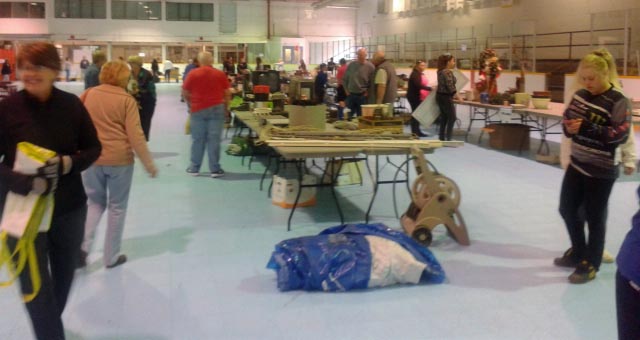
INGERSOLL – Building on last May’s very successful event, Oxford People Against the Landfill (OPAL) and the Oxford Coalition for Social Justice will be hosting TrashapaloozAHA 3!  Sat., September 20 from 9 a.m. to 5 p.m. in Sweaburg’s Lions Ball Park, located at 474379 Dodge Line, with a final drop off time for items at 2:00 p.m. This free family festival aims to give discarded items a second chance to find a useful purpose and to keep them out of the landfill.

As the name suggests, this is the third TrashapaloozAHA event that OPAL and Oxford Coalition for Social Justice have partnered to present. The first two events were held at Foldens in May 2013, then at the Ingersoll District Memorial Arena in May 2014 as a way to create an AHA! moment for the community, timed with the annual municipal large item curbside collections.

The success of these first two events prompted organizers to follow-up with a third event. “We learned from the first two that there is definitely a demand for this type of giant swap-meet,” the Coalition’s Bryan Smith says, “not just in Ingersoll but throughout Oxford County.”

Feedback from the May 2014 event suggested that holding such an upcycle event outside of Ingersoll would be equally successful, and Sweaburg was chosen as a suitable location for its easy access to all of Oxford.

The genesis of the event came during the 2012 spring garbage collection, when Ingersoll residents were struck by the irony of discarded item piled next to their “Stop the Dump” signs. “OPAL determined we needed to be more involved in reducing the amount of stuff that ends up in the landfill,” says OPAL chairperson Steve McSwiggan. “As concerned citizens, we have united against any future landfilling, by any proponent, in our county.”

The grass roots, non-profit residents groups’ response was to create TrashapaloozAHA!, a community free-cycling event that encourages residents to bring their cast-offs to a central location where everything is free. This September, throughout the day, residents of Oxford County can bring in their items to Sweaburg, including things that would normally be put out for municipal large item collection, and donate them. Attendees of TrashapaloozAHA 3! will be able to check out  and take home items including home décor, construction, furnishings, gardening, garage, sporting goods, fashions, books, magazines & comics, entertainment & electronics, kids’ stuff, and more.

“The TrashapaloozAha! concept has been an outstanding success. People have donated still functional furniture, dishes, toys, construction materials, lighting fixtures, garden pots, golf clubs, motorcyclist’s leathers, fish tanks with accessories, a telescope, electric guitar, baby items and so much more. They’ve also brought old parts and other salvageable stuff that could be used for repairs and up-cycling,” says Smith, “Others were glad to find them and to have them for free.”

“As we now know from experience, TrashapaloozAHA! attracts dumpster divas, pickers, eco-artists, do-it-yourselfers, stage designers, crafty kids, motorheads, gardeners and just about everybody else,” Smith says. “It was fun, watching little children carefully pick out their new free toys. Some people came back throughout the day to scoop new finds. Stuff was flying out of our doors. By the end of the day, very little was left to send to the landfill.”

People are also encouraged to donate items that can be stripped for copper and other metals then sold to a recycler to help raise funds for the battle against Walker Industries’ proposed mega-landfill. OPAL and The Oxford Coalition for Social Justice are also undertaking the safe collection of used batteries and paint dropped off by attendees. Fusion Youth Centre will be collecting old computers, televisions and other e-waste.

During last May’s TrashapaloozAHA event, held at the Ingersoll District Memorial Arena, approximately 10,000 sq. ft. of discards were diverted from the landfill and given second chances by new owners. A truckload of e-waste was hauled away by Fusion Youth Centre; a utility trailer of construction material was diverted to Habitat for Humanity’s Re-Store in Woodstock and a vanload of household items was delivered to local charity shops.

Building on the momentum of the most recent event, organizers anticipate the day will net even bigger results in Sweaburg. Additionally, it will be an opportunity for the community to meet in passing and to share diversion strategies.

“Every item we can keep out of the municipal landfill and put to good use is a victory for us and our environment,” Smith says, adding “The fact that TrashapaloozAHA! is a blast is a bonus.”

As an OPAL Alliance member, the Ingersoll District Nature Club also supports and participates in the event.  Sheila Fleming, Club President, advises that the day is a success from their perspective as “it helps to ensure landfill use is reduced.”  Oxford County’s landfill at Salford has an enviable record of reducing infill through the many recycling opportunities they support.  “TrashapaloozAHA 3! is one more useful step to waste less.”


Endangered Species in Focus: Black Redhorse (Moxostoma duquesnei)

BlackRedhorse1BlackRedhorse3


Status: Threatened Provincially and Nationally


Description:

The Black Redhorse is a member of the sucker fish. It sucks in materials from the bottom and then expels any silt (earthy matter, fine sand, or the like).They eat crustaceans and insects. The younger fish are thought to prefer plankton. It will grow to about 50 cm. in length and weigh up to 1 kilo. The age of maturity is between two and six years, some individuals have been known to reach the age of 16.


Important Dates:


2008: Species assessed as Threatened under the Endangered Species Act

June 30, 2013: Species granted Habitat Protection


 BlackRedhorse2

Range:

  • In Canada, the Black Redhorse is found only in southwestern Ontario at a few locations in the Bayfield River, Maitland River, Ausable River, Grand River, Thames River and Specier Creek ; and
  • It occurs in clean, swift flowing creeks and rivers with bottoms of gravel, rock, or sand and has a low tolerance for pollution.


Habitat:

  • Generally lives in moderately sized rivers and streams, and with generally moderate to fast currents. In summer, they generally prefer pools and overwinter in deeper pools; and
  • Spring spawning has been observed in water temperatures between 15-21 degrees celsius and eggs are laid on gravel in fast water.


Threats:

  • The decline of the Black Redhorse in Ontario was probably caused by overfishing and habitat alteration;
  • Current threats include dam construction and reservoir development; and
  • The Black Redhorse requires clean, clear water and does not do well in rivers that are muddy or polluted.


Protection:

  • Protected under the habitat section of the Fisheries Act;
  • Protected under Ontario’s Endangered Species Act, 2007;


What YOU Can Do to Help:

  • If you have an encounter with the Black Redhorse, ensure that you report your sighting with the Ministry of Natural Resources and Forestry. The Natural Heritage Information Centre has a handy online form to assist with this (find out how to do that here)
  • Maintaining the flows at the run-of-the-river would be helpful, especially during spawning.


FUN FACTS:

  • Every year between May and June, the sides of a male black redhorse darken to a greenish-black, and a pink stripe runs the length of its body. After spawning season, this colouration fades to a bluish-silver; and

There are a total of seven Redhorse species in Canada, the Black Redhorse is distinguishable based on a combination of tail colour, lip formation and scale counts – very hard to tell them

Check Out Ingersoll District Nature Club’s #DIY4bees Project


Check out Ingersoll District Nature Club’s #DIY4bees Project


Helping The Bees!
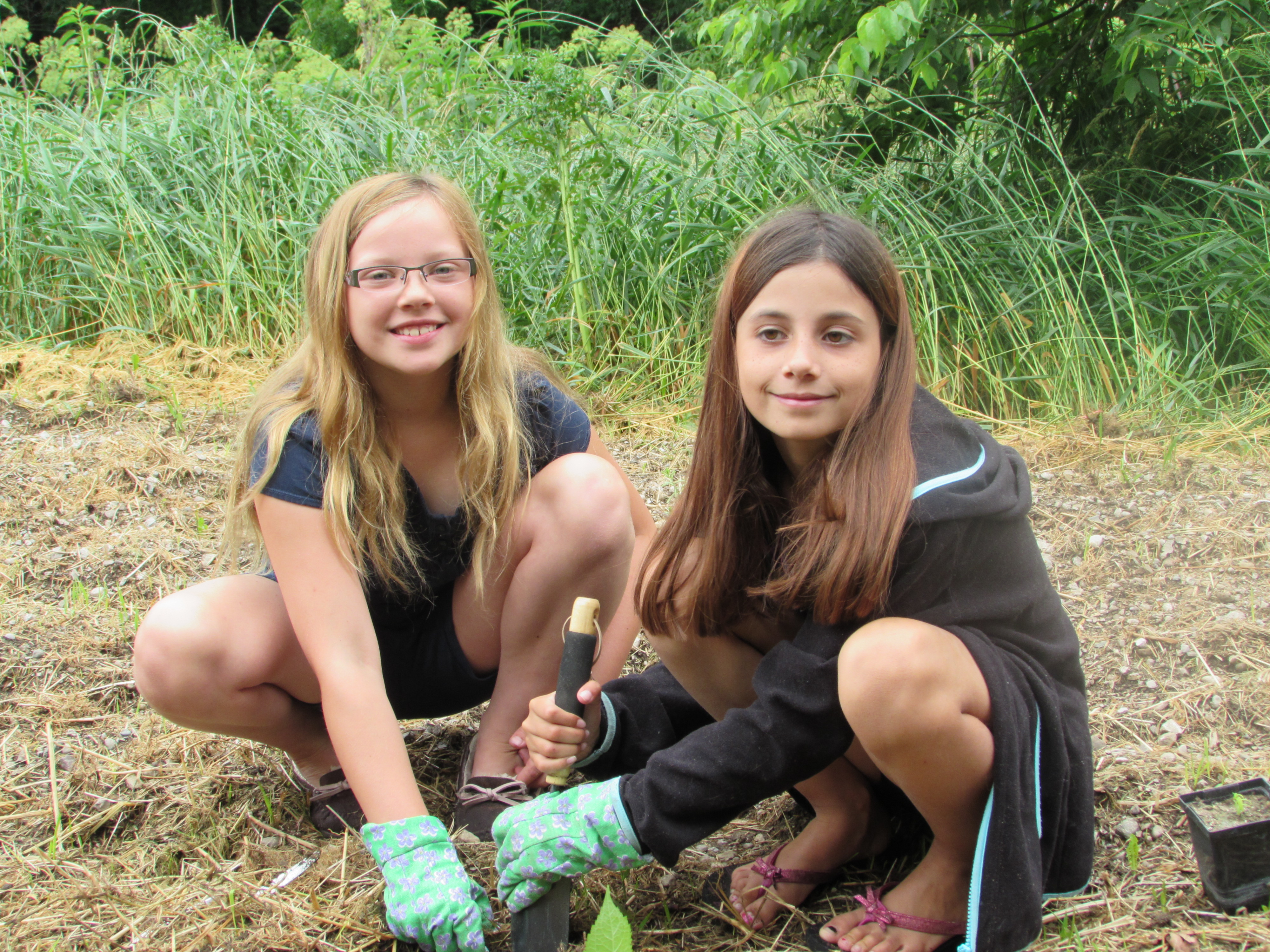
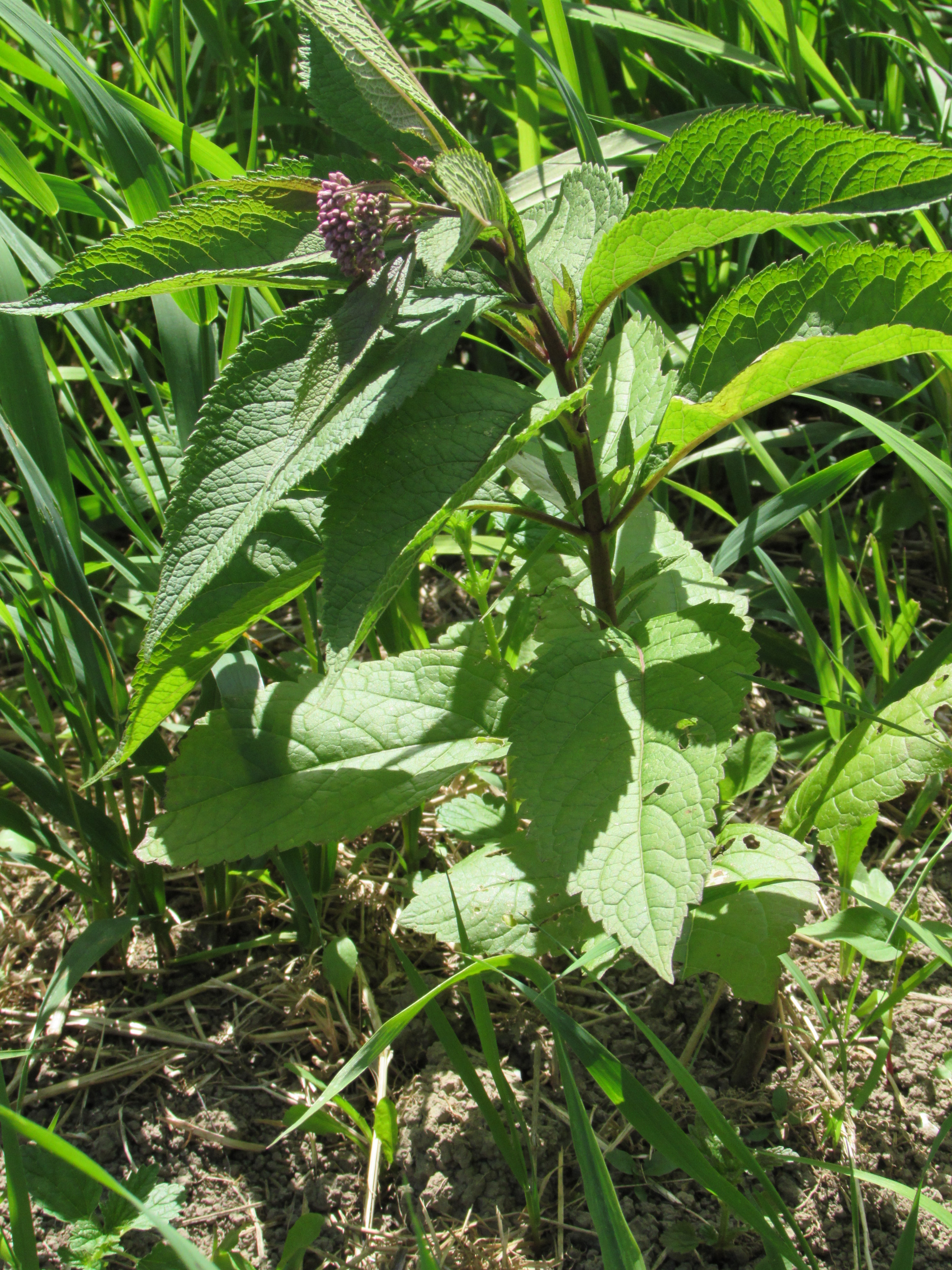
On June 25, the Ingersoll District Nature Club helped Ms. Young’s Grade 3/4 class from Laurie Hawkins Public School to create a pollination garden at Smith’s Pond in Ingersoll as a way to “create awareness regarding the decline of the honeybee and how important pollinators are to our food supply.”


Want some ideas for your own #DIY4bees project? See more from the David Suzuki Foundation at http://www.pinterest.com/dsfcanada/diy4bees/


David Suzuki #SavetheBees
http://go.davidsuzuki.org/O0Y0j4rU00000V410D0N1wD

IMG_0323 smith1

This Week’s Endangered Species In Focus: Spiny Softshell (Apalone spinifera) Turtle

Spiny Softshell (Apalone spinifera) Turtle


softshell2softshell1


Status: Threatened Provincially and Nationally


Description:

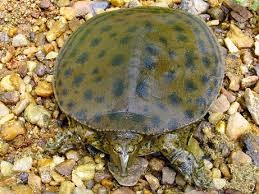
The spiny softshell turtle is one of the largest freshwater turtle species in North America. It is Ontario’s only turtle with a flexible, leathery upper shell. The shell is olive-grey, brownish or tan, and its edges are yellow with a black outline, along each side of the head is a distinct yellow stripe outlined in black. In adult females, the shell may be smooth, but there are several large spines or cone-like projections.  Spiny softshells begin mating between the ages 8 and 10 in mid-to-late spring and the eggs will hatch in late August to September.


Important Dates:


2008: Species assessed as Threatened under the Endangered Species Act


June 30, 2013: Species granted Habitat Protection


Range:

  • In Canada, the Spiny Softshell is found only in Quebec and southwestern Ontario in the Lake St. Clair, Lake Erie and western Lake Ontario watersheds;
  • The majority of Spiny Softshells in Ontario are found in the Thames and Sydenham Rivers, as well as two sites in Lake Erie;
  • Some turtles travel up to 30 km. in a year from one part of their home range to another.


Habitat:

  • Generally found in rivers with soft bottoms, aquatic vegetation and sandbars or mudflats;
  • Require gravelly or sandy areas for nesting and deep water for hibernating;
  • They are active during the day, eating crayfish, aquatic insects and fish;
  • It rarely ventures far from the shoreline, and may be seen basking on beaches, sandbars, logs and rocks.


Threats:

  • The main factor responsible for the decline of this turtle is thought to be habitat loss or degradation resulting from shoreline development or agricultural activity;
  • This turtle suffers high mortality due to collisions with motorboats, trapping and fisheries
  • The nests of the Spiny Softshell are threatened by human recreational activities and predators such as raccoons and foxes.


Protection:

  • The Spiny Softshell is protected under the Ontario’s Endangered Species Act, 2007;
  • The Ontario’s Fish and Wildlife Conservation Act protects this species as well;
  • Some populations that live in Provincial Parks and Conservation Areas will receive further protection through their programs.


What YOU Can Do to Help:

  • Good nesting sites are limited; if you own riverfront property, maintain a buffer of open beach above the waterline; try not to disturb exposed sandbars or sand/gravel shorelines, especially during May to October;
  • To learn more about Ontario’s rare turtles, their habitat and conservation efforts, visit Ontario Nature’s Ontario Reptile and Amphibian Atlas (http://www.ontarionature.org/protect/species/herpetofaunal_atlas.php) or the Toronto Zoo Adopt-a-Pond (http://www.torontozoo.com/Adoptapond/);
  • The Spiny Softshell is at risk of collision with watercrafts; if you know they are in the area, proceed carefully and be observant while coming on shore, or driving over lakes and bays;


FUN FACTS:

  • Some turtles travel up to 30 kilometres in a year from one part of their home range to another;
  • Spiny softshells hibernate underwater in sand during the winter months; they can go without breathing for the entire winter and absorb small amounts of oxygen through their mouth;
  • Softshells ambush their prey by lying concealed in bottom mud;
  • A large female turtle may live up to 50 years;

This Week’s Endangered Species In Focus: Least Bittern (Ixobrychus exilis)

This Week’s Endangered Species in Focus:

Least Bittern (Ixobrychus exilis)

  Least Bittern2 Least Bittern1 Least Bittern3


Status: Threatened Provincially and Nationally


Description:

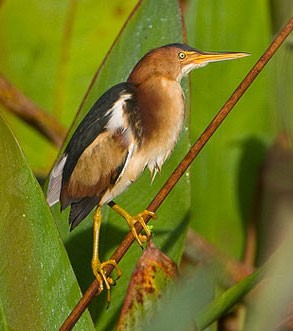
The Least Bittern is one of the smallest and lightest herons in the world (no larger than an American Robin). It typically grows to only 13 inches in length, has a wingspan of 17 inches and an average weight of just 3 ounces. The crown and back of the males is black, but is lighter in the females and juveniles. The Least Bittern feeds on small fish, frogs and insects.

Important Dates:


June 30, 2008: Species Listed at Risk

June 30, 2013: Species Granted Habitat Protection


Range:

  • Widely found in North, Central and South America;
  • In Canada, the Least Bittern live in southern Manitoba, Ontario, Quebec and New Brunswick, but primarily breeds in southern Ontario;
  • Marsh bird monitoring programs estimate the decline in Ontario of over 30% between 1999 and 2009; and
  • In winter, the Least Bittern hibernates in the Southern United States, Mexico and Central America


Habitat:

  • The Least Bittern begins its nesting period in the prime marsh habitat of early spring. The presence of dense vegetation is essential for nesting because the nests sit on platforms of stiff stems – females lay approximately four or five eggs and can produce up to twice per season;
  • In Ontario, the Least Bittern can be found in a variety of wetland habitats, but strongly prefers cattail marshes with a mix of open pools and channels;


Threats:

  • The main threat to Least Bitterns is draining of wetlands for conversion to farmland and urban development;
  • The Least Bittern does not tolerate human disturbance well and will leave marshes if human activity or habitat alteration becomes too great;
  • Least Bitterns generally fly fairly low and as a result are sometimes killed by cars, where roads pass through wetlands. They are susceptible to collisions with hydro lines, guy wires on towers, or hitting tall buildings that are illuminated at night (when they migrate);
  • Invasive species such as Purple Loosestrife, Reed Canary Grass, Common Reed, and Flowering Rush are outcompeting the cattails in which the Least Bittern breeds


Protection:

  • The Least Bittern is protected under the Migratory Bird Treaty Act of 1918 – this statue makes it unlawful without a waiver to pursue, hunt, take, capture, kill or sell birds listed therein (“migratory birds”);
  • Also protected by Ontario’s Endangered Species Act, 2007 and the Species at Risk Act (SARA);
  • The Least Bittern and its Nest are protected under the Migratory Birds Convention Act; and
  • Birds that live in provincial parks and conservation areas also receive additional protection through their programs.


What YOU Can Do to Help the Least Bittern:

  • If you happen to see a Least Bittern and capture the sighting, contact the Ministry of Natural Resources to report your sighting and provide details of the location – learn about that process here (https://www.ontario.ca/environment-and-energy/report-rare-species-animals-and-plants);
  • Bird Studies Canada is a not-for-profit organization working on the conservation of wild birds and their habitats – learn more about them here (http://www.bsc-eoc.org/about/index.jsp?lang=EN);
  • Least Bitterns are quite shy and secretive, particularly during the breeding season (May to mid-July), and are easily scared away. If you know of a breeding zone, try to give them lots of room and distance;
  • Non-native plants create competition among the breeding ground for the Least Bittern. To learn what you can do to help eliminate these invasive species, visit Ontario Invasive Plant Council here (http://www.ontarioinvasiveplants.ca/); and
  • As always, volunteer with your local Nature Club or Provincial Park to learn more about protecting our endangered species.


FUN FACTS:

  • When alarmed, the Least Bittern freezes in place and sometimes sways to resemble wind-blown marsh vegetation;
  • Thanks to its habitat of straddling reeds, the Least Bittern can feed in water that would be too deep for other herons;
  • The nests of the Least Bittern are almost always within 10m of open water; and
  • The scientific name for this heron, Ixobrychus, was incorrectly translated from Latin in 1828. It was intended to mean “reed boomer” – a reasonable name given the bird’s call, however if translated literally means “greedy eater of Mistletoe”!